
Living by Making | Issue 37
It has been a rough couple weeks at home trying to find a rhythm. I think I am finally getting there. Below is the story and the poem in song format.
At the Workbench
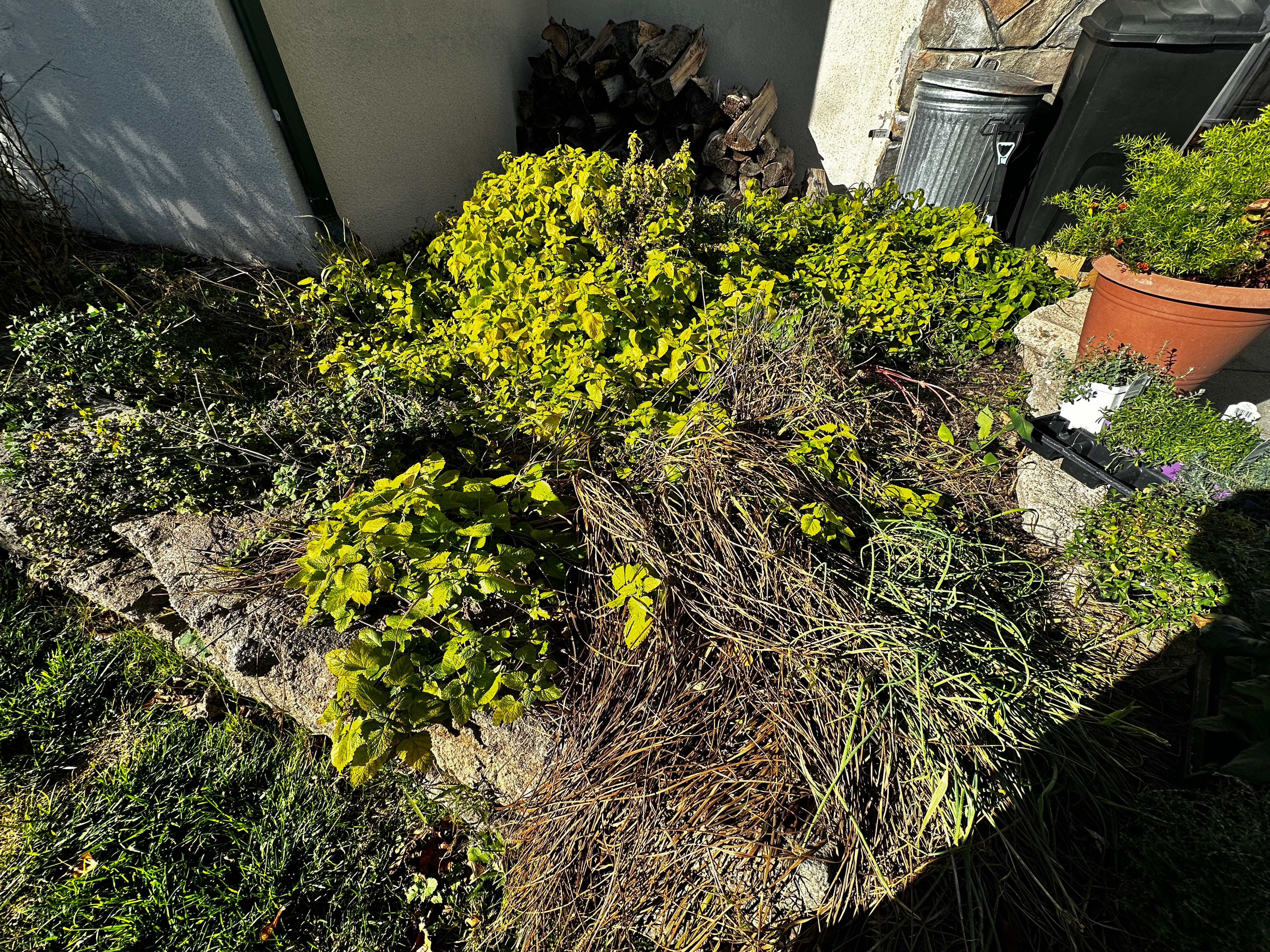
I was on my knees in one of the big beds, pulling out a few years’ worth of neglect, when something lumbered past at the edge of my vision. It was big enough that I stopped with my hands in the dirt and thought, what in the heck was that? A big cat? A raccoon in broad daylight? I kept working and kept one eye open, and after a while a woodchuck came meandering out from under the house next door, the one that will someday be the artist residency, sat himself down, and watched me work. He didn’t seem the least bit worried about it. I named him Joe.
I have lived in Nebraska most of my life and I had never seen a woodchuck here, and certainly never in town. Joe had dug several holes around that house, which is the kind of thing that turns into a foundation problem if you let it, so as much as I liked him, I set a trap. I caught Joe and drove him to the city animal control for rehoming. I hope they take him far enough out that he doesn’t find his way back. I also hope wherever he ends up has soft ground and nobody watching. I should also tell you, since we’re being honest, that this is the first time I have written to you in two weeks. I couldn’t even bring myself to write my TOS Insiders notes.
Under the Surface
I’m not entirely sure why I stopped. For five weeks in Ireland, my whole job was to walk and write, mind a house and a dog, and pay attention. Then I came home, and home had been keeping a list. The yard was bad enough that walking out into it gave me a stomach ache. The studio and the woodshop are a wreck, embarrassingly so, and I’m still not ready to show you a picture. Every house project I have put off for five years seemed to start yelling at once. The Turkey Trot I direct is coming up fast. Unhurried Letters had to be finished and sent out. There’s a visit to Seward on the calendar, where I’ve been given a two-month residency, and they want to walk me through the studio by the river and the place I’ll be staying. And I had a painting due for a show.
Somewhere in all of that, two Thursdays went by. I could tell you I was busy, and I was. But the truer answer is that I think I was grieving a little. I had a kind of freedom over there that I hadn’t had in decades, and coming home meant picking up every responsibility I had set down, all at once. I did write an issue. I didn’t like it, and I couldn’t bring myself to send something I didn’t believe in, and then I couldn’t bring myself to write anything at all for a while. I was damaged goods, it seems.
While I was in Ireland, a man named Dave knocked on the cottage door. His family owns the place down the lane, and he told me that for insurance purposes somebody has to be in the house at least once every forty-five days. An empty house goes downhill. I thought about that more than once these past two weeks, out in the yard. My house had somebody in it the whole time I was gone, because my sweetheart kept everything running. But a yard and a studio and a woodshop need their own kind of somebody, and they had been waiting a long time for theirs.
Studio Notes
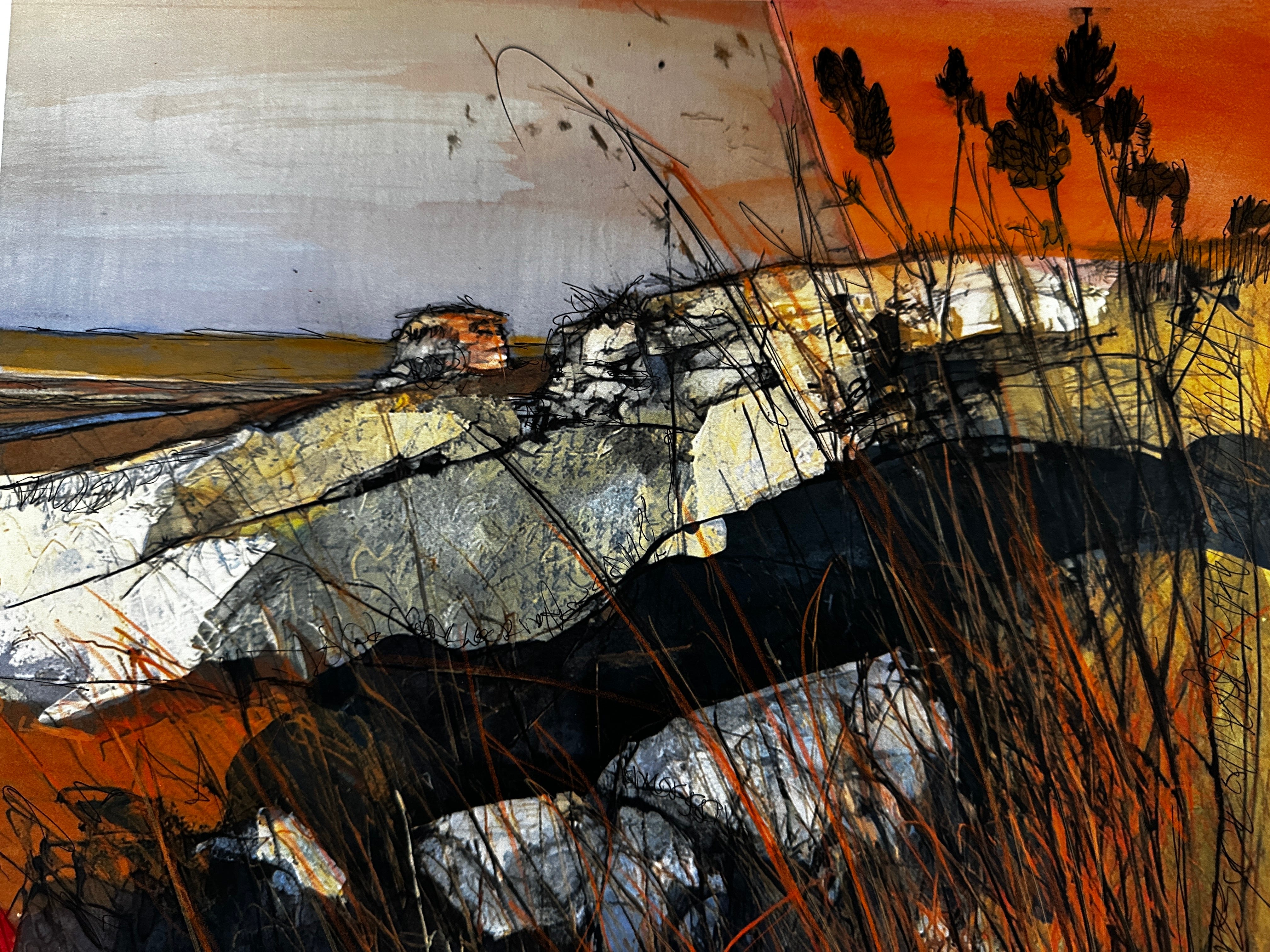
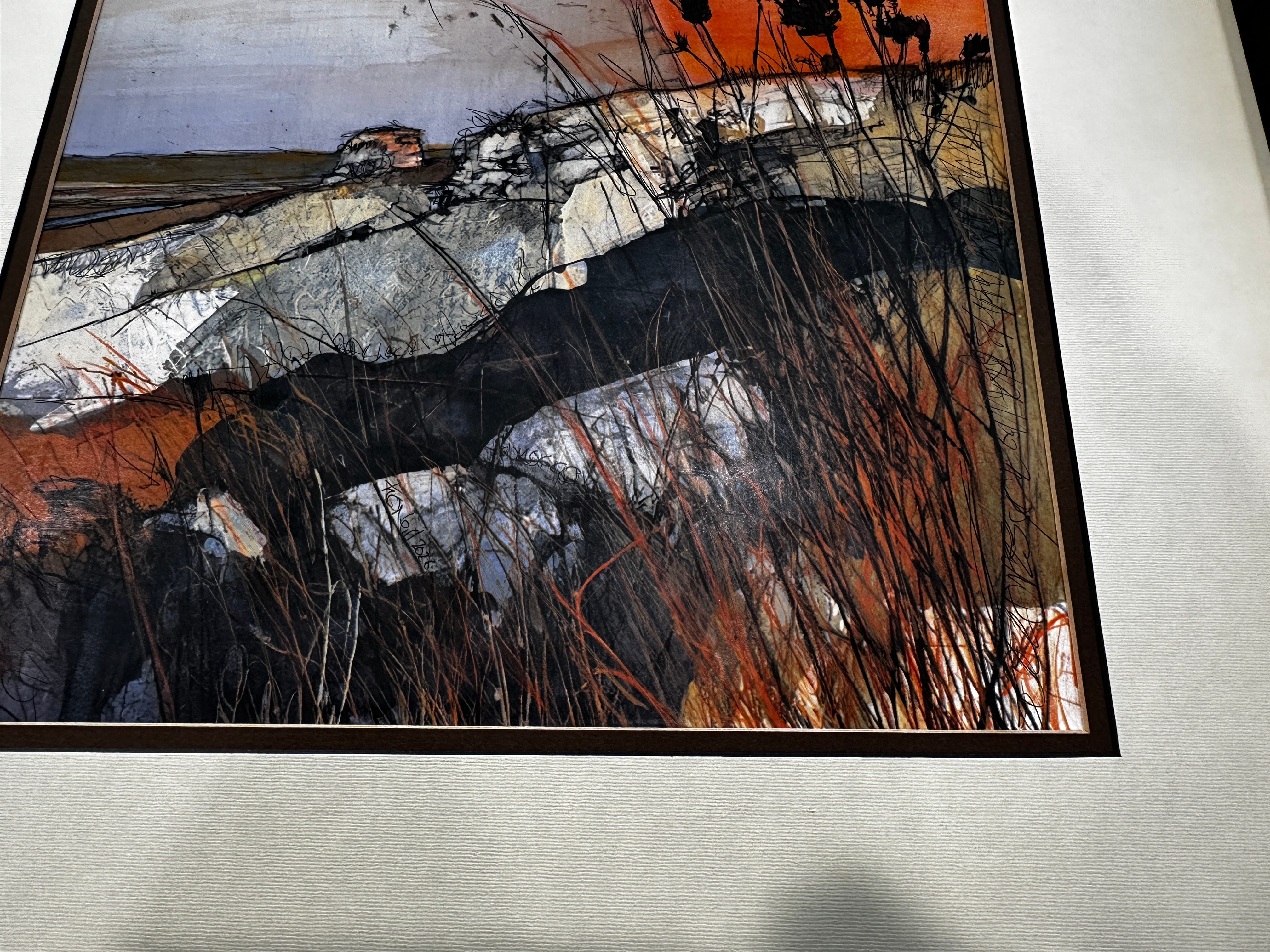
The painting is for a show called “It Takes a Soul to Love the Prairie,” Nebraska artists responding to Willa Cather. Mine is called “Picture Writing,” and it was inspired by my favorite moment in My Ántonia. Jim and the girls are sitting out on the prairie at sunset, and on some upland farm a plow has been left standing in a field, with the sun sinking just behind it. For a minute the whole plow is held inside the circle of the sun, “the handles, the tongue, the share, black against the molten red.” Cather writes, “There it was, heroic in size, a picture writing on the sun.” Then the sun drops, and “that forgotten plough had sunk back to its own littleness somewhere on the prairie.”
I love that image as much as anything Cather ever wrote. I’ll be honest, though. I didn’t enjoy making the painting the way I usually enjoy making things. I made it in production mode rather than love-to-create mode, with a deadline on the calendar and a yard full of saplings outside the window. It’s finished and framed and I’m proud of it. But I know the difference, and so does anyone who makes things for a living.
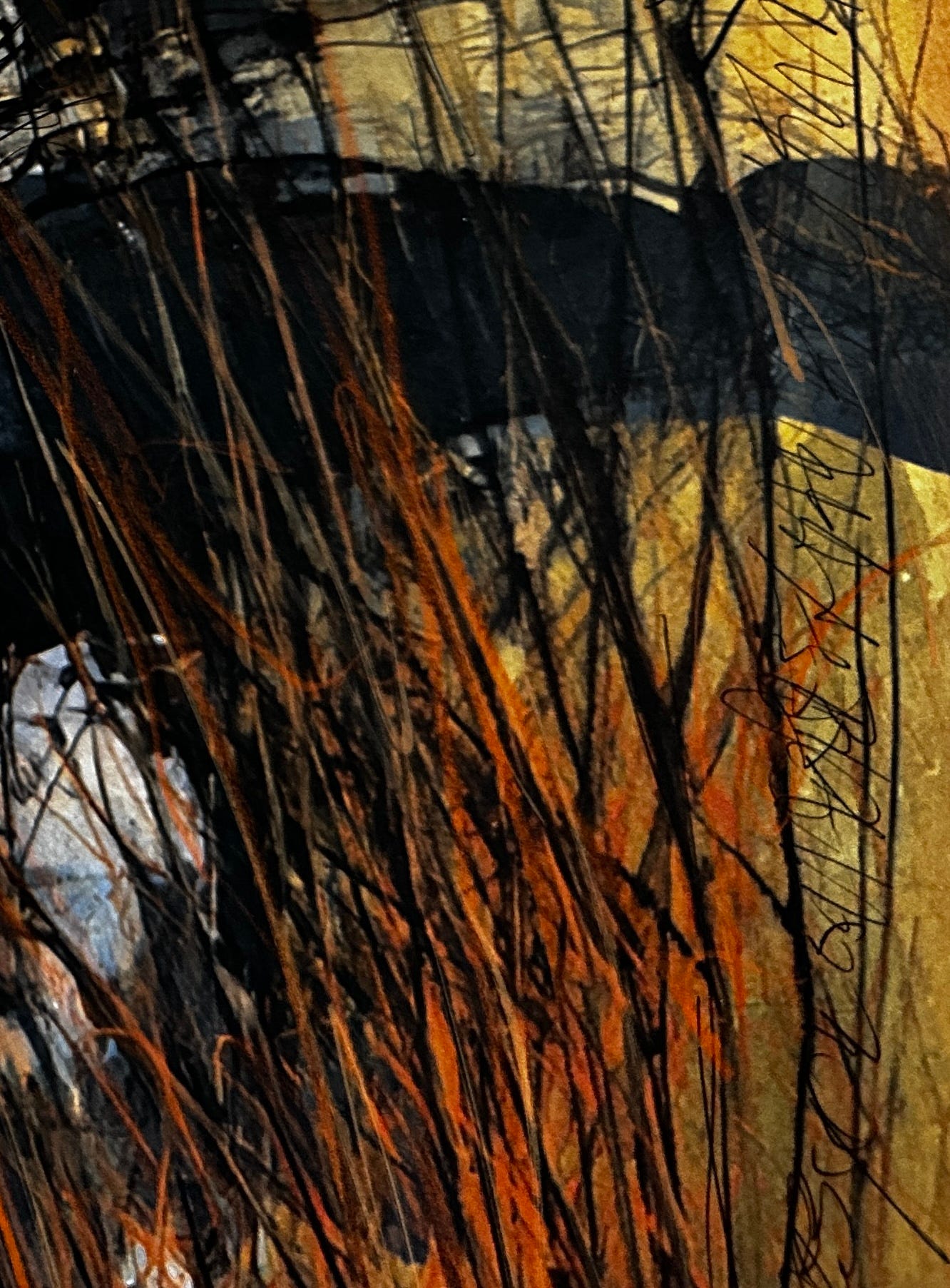
There’s no plow in it, either. I tried the plow against the sun and found it boring, so I let the plow go and kept the sun. What’s left is a slope of pale rock and dark earth under a lavender sky, tall grass in rust and black leaning hard in the wind, and a row of seed heads standing up black against an orange sky. Up on the ridge sits a small broken shape that could be what’s left of a house or an outbuilding, the kind of thing you see all the time looking out across the prairie, a piece of what could be. I left it unfinished on purpose so you can put your own memory into it. And if you look closely, there’s handwriting all through the painting, mine, some of it real words and some of it asemic, writing that has the shape of language without the words, scribbled along the ridge, tucked down into the grass, running up the edges. It’s small, nine by twelve, spray paint, acrylic, ink, pan pastel, watercolor and colored pencil on cotton rag paper, finished in cold wax. When I looked at it again this week I laughed, because for two weeks I told myself I wasn’t writing, and the whole time I had been writing on the sun.
There is research on that difference. The Harvard psychologist Teresa Amabile has spent decades studying creativity at work, and her central finding is what she calls the intrinsic motivation principle: “People are most creative when they are motivated primarily by the interest, enjoyment, satisfaction, and challenge” of the work itself. Deadlines and pressure don’t always kill creativity, but they crowd out the part of the work you came for. I think that’s what was missing from the painting and from these two weeks. The work got done. The love was just quieter than usual.
On the Table
So I went outside. Sixty hours or so later, the yard no longer gives me a stomach ache. I cut down more than thirty saplings that had moved into the beds, and there’s one bed still to go. I cleaned out a whole section on the east side of the house next door, Joe’s side, which nobody had touched in a few years. The best nursery in town was blowing out perennials at a dollar apiece, so I came home with twenty-five. Some went into the ground properly. The rest are tucked into a temporary bed until I can move them in the spring. I made about a hundred cuttings from the elderberry, currant and blackberry, and dug a pile of live-root goji and gooseberry, all to sell or trade, and most of them have already found new homes. Yesterday the sprinklers were blown out for winter.
Then there’s the woodshop, which is a different story. Insulation is scheduled so the shop can be used this winter, and the new walk-in door is sitting there ready to go in. The studio I’m not going to talk about yet.
None of it was art, exactly, but my hands were in it all day, and somewhere around the twenty-fifth perennial I noticed I was enjoying myself again. Here is something small for your own table this week, especially if you have just come home from something, a trip, a retreat, a hard season. Don’t take on the whole yard. Pick the one bed that gives you the stomach ache and clear only that. When you can walk past it without flinching, pick the next one.
In Good Company
Read: My Ántonia by Willa Cather, free on Project Gutenberg. If you have never read it, read it for the prairie. If you have, go back to Book II, Chapter 14, and read the plow at sunset again. It’s only a paragraph, and it sums up the whole book.
Listen: John O’Donohue, The Inner Landscape of Beauty, from On Being with Krista Tippett. The Irish poet and philosopher grew up in the Burren on the west coast, and in this 2008 conversation, one of his last, he calls spirituality “the art of homecoming.” That’s as good a description of the past two weeks as I have found.
Watch: Yours, Willa Cather, a half-hour documentary from Nebraska Public Media, streaming on PBS. It tells Cather’s life through her own letters, drawn from the Selected Letters of Willa Cather edited by Andrew Jewell and Janis Stout. Cather wrote in her will that her letters were never to be published, and they stayed that way for decades, so hearing them now is a little like reading over her shoulder. It’s a good companion to a painting full of handwriting, and to anyone who still believes in mail.
A Quiet Note
The newest Unhurried Letters just went out, the first one finished since I came home, made from real trips and real photographs and mailed to real mailboxes. I have new stories from Brazil and of course a bunch from Ireland that will find their way in the coming months. You can find it at unhurriedletters.com.
Leave the Light On
I keep thinking about that plow. Ireland was the sun behind it. For five weeks everything I did felt and looked a little heroic in that light, the walking, the writing, the dye pot, the strangers who became friends. Then I came home, the sun went down, and here I am, back to my own littleness somewhere on the prairie. Cutting saplings. Trapping a woodchuck. Blowing out sprinklers. Cather doesn’t treat that as a failure, and I’m trying not to either. The plow was never heroic. It was a plow, left standing in a field by someone who would come back in the morning and use it.
Joe is somewhere new now, digging. The walk-in door is leaning against the woodshop wall, waiting. And I’m back at the table on a Thursday, which is where I meant to be all along.
Keep making, keep growing, be you.
Tio
(Below is the song, “Back to My Own Littleness”. I wrote the lyrics, Suno produced the song. Real music? Maybe not but still fun to put my poems to music.)
“The plow was never heroic. It was a plow, left standing in a field by someone who would come back in the morning and use it.”
References
Willa Cather, My Ántonia (1918), Project Gutenberg: https://www.gutenberg.org/ebooks/242
Yours, Willa Cather, Nebraska Public Media, PBS, 2015: https://www.pbs.org/video/net-nebraska-presents-yours-willa-cather/
The plow passage, Book II, Chapter 14, LitCharts: https://www.litcharts.com/lit/my-antonia/symbols/the-plough
Teresa Amabile, “How to Kill Creativity,” Harvard Business Review, 1998: https://hbr.org/1998/09/how-to-kill-creativity
Teresa Amabile, intrinsic motivation principle of creativity, The Progress Principle: https://progressprinciple.com/portfolio-items/creativity-innovation-and-motivation/
John O’Donohue, “The Inner Landscape of Beauty,” On Being with Krista Tippett: https://onbeing.org/programs/john-odonohue-the-inner-landscape-of-beauty-aug2017/
Unhurried Letters: https://unhurriedletters.com
One-Click Check-In
If you want to read this later or find other issues, you can find them here or hit subscribe.