
Living by Making | Issue 28
At the Workbench
I am writing this from a plastic seat in the arena in São Paulo, a few days into a trip that took twenty-four hours of travel to get here and will take ten more days before it sends me home, but the day started a long way from here. Morning does not ease into a metropolis of twenty-two million, it arrives all at once, sirens and horns and the two-stroke whine of scooters weaving through traffic that never fully stops, jets crossing overhead close enough to feel in your chest before you hear them. Somewhere underneath all of it there is still one particular songbird working through its own sweet, off-tempo little melody, getting interrupted every so often by an anxious rooster a few yards over.
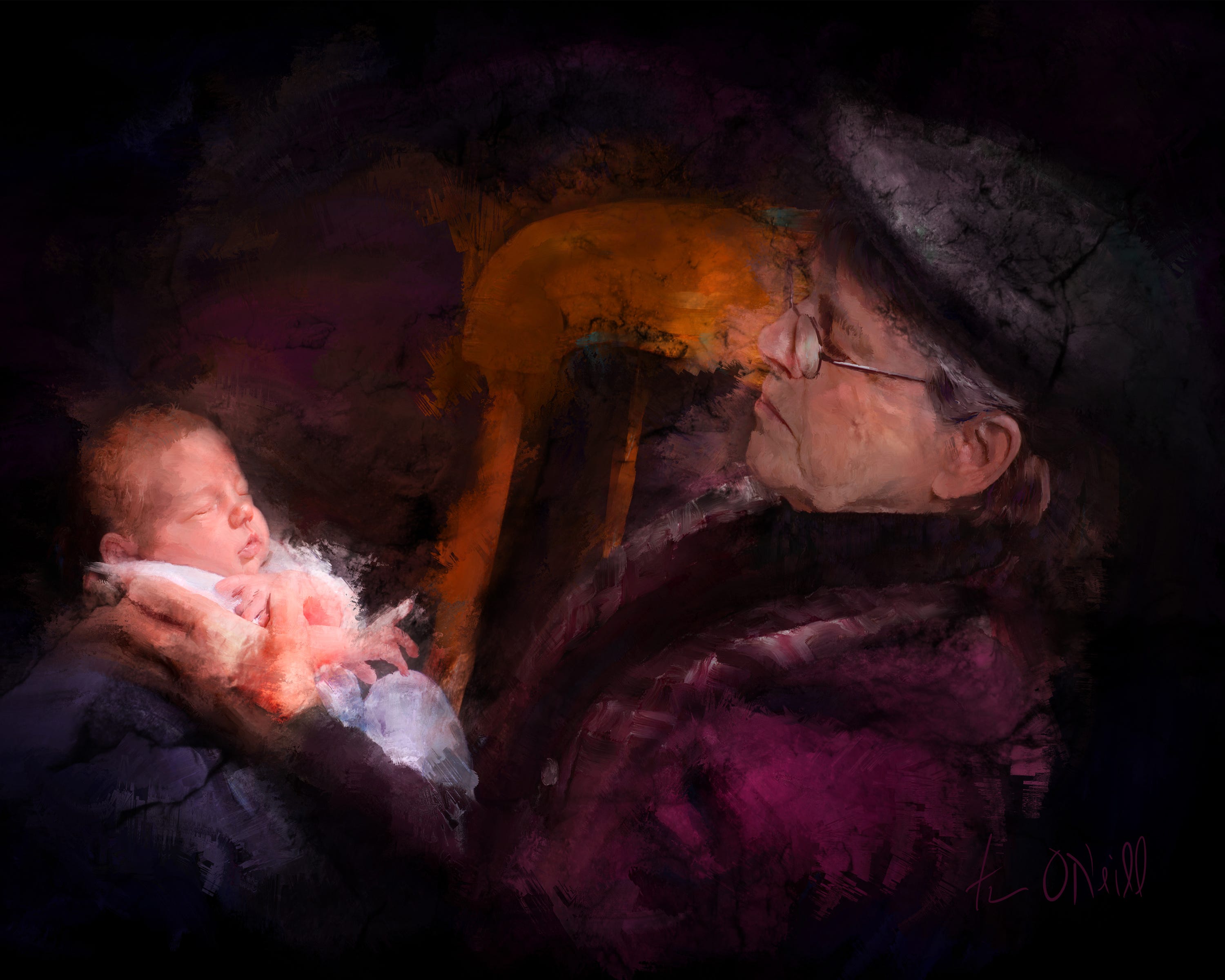
The air is still cool from the night when I leave the apartment, and getting out involves more locks than I expected, lock the bedroom door behind me, lock the house door behind me, unlock the gate, go through, lock the gate again. My daypack is light, just the essentials for a day on foot, water, a rain jacket, a hat, jerky, granola, a protein bar, and the small print of a painting from our hallway back home tucked in the outside pocket, which is a strange thing to be hauling across a city like this, though I am glad I did. I take an Uber to a different part of town for espresso, end up talking for ten minutes with a friendly man from Lebanon who has run his little shop here for years, then walk over to MASP, the art museum, before Ubering back across town for tonight’s game. Somewhere in a room full of other people’s paintings, I pulled mine out of my pack and actually looked at it, the way you actually look at something, not the glance you give it on your way out the door.
Under the Surface
The painting is called Grandma Rocks. It shows my wife’s mother in an old wooden rocker, holding my youngest daughter Elise as a newborn. I have studied that woman’s face more this week than probably any week since the painting was made, twenty-two years now, trying to read whatever is passing between the two of them. What I have not really told before is the actual timing of it. Doctors had told us years earlier that another pregnancy was not something to plan on, which is part of why we adopted my youngest son and made our peace with the family we had.
People will tell you that’s when it happens anyway, once you’ve stopped trying and made peace with things, and in our case that turned out to be true, though it took its own strange timing to prove it. In the same stretch of weeks we were living out of a hospital room in Denver, not knowing some days whether our son would survive the week, we already knew that Allison was pregnant, against exactly what we had been told to expect. Elise was born just weeks after Josh finally came home, arriving healthy and loud right on the heels of it, impossible by the numbers we had been given years before.
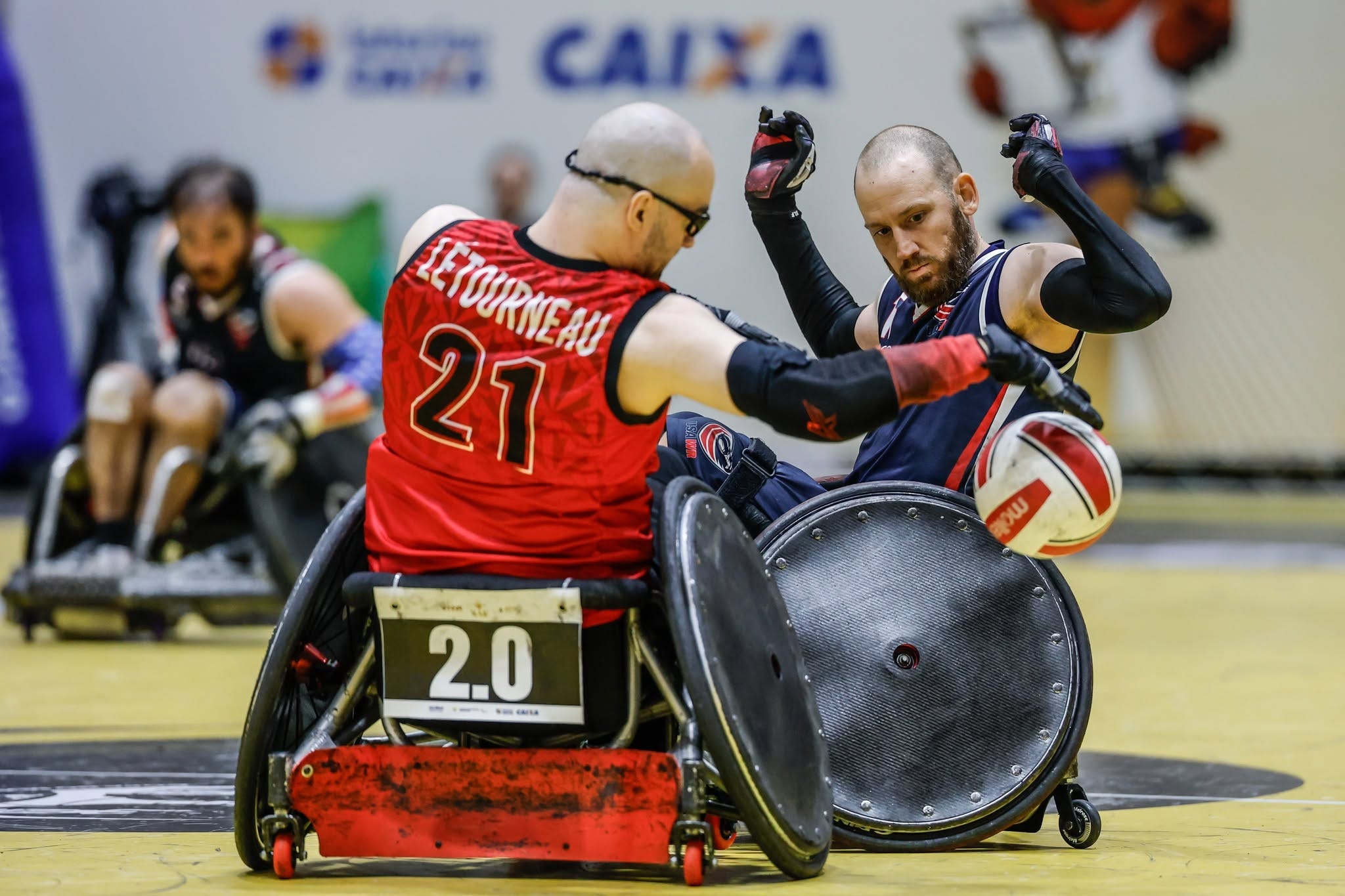
I do not have a tidy way to explain that timing and I am not going to pretend I do. What I know is what it felt like from inside it, which was not whiplash, not grief and relief slamming into each other with no room between them. It felt like someone opening a door in a room that had gone dark, right when the dark had gone on long enough that we had stopped expecting a door. Somewhere below me right now Josh’s chair collides with another one, titanium ringing off titanium, and that specific, physical sound gives that old feeling somewhere to go besides just around in my own head.
Studio Notes
Here is the part of the story I do not tell often. Josh was sixteen, driving himself home from an out-of-town basketball game the way rural Nebraska kids do once they have a permit, coming usually directly on the heels of a 14th birthday, twelve miles of dark two-lane between the school and our house. No moon that night, the road that particular kind of rural quiet you only get after ten o’clock, when everyone with sense is already home. He was going highway speed, plus a little more than that if I am honest, fresh out of the postgame shower, hair still wet, nothing on but a t-shirt for a twelve-minute drive he had made a hundred times before.
A Black Angus cow had gotten loose from somewhere and was standing broadside in the middle of the lane, black on black on a moonless night, and he never had a chance to see it coming. The windows all blew out on impact. It was fourteen below zero that night, and he lay there with wet hair and a t-shirt and a hole where the glass used to be, the cold coming in fast enough that hypothermia became its own emergency before the Flight for Life helicopter ever got off the ground. He knew he was hurt. He could not move to get up, or to find his phone, his coat, or to move out of the middle of the road. Sixteen years old that day. His birthday. Alone. In the middle of the night, the middle of a black highway. It still hurts thinking about it.
When they finally got him out of that car, there was exactly one injury on him. No cuts. No bruises. Nothing broken except his neck, a C-5 fracture that nicked the spinal cord. What followed was months at Craig Hospital in Denver that I remember now mostly in pieces, the hum of the monitors that never stopped, months in a recliner chair that never let anyone actually sleep, the particular hallway smell of a place that runs the same at three in the afternoon as it does at three in the morning. You stop asking whether things will be fine and start just watching for whether he survives the week. Somewhere in the middle of it, in that same room, I watched my sixteen-year-old son console a doctor in his thirties who had broken his own neck a few months after Josh did, telling a grown man in scrubs that it was going to be okay. That is the moment I knew he actually would be, not because any scan told me so, but because of who he still was underneath all of it.
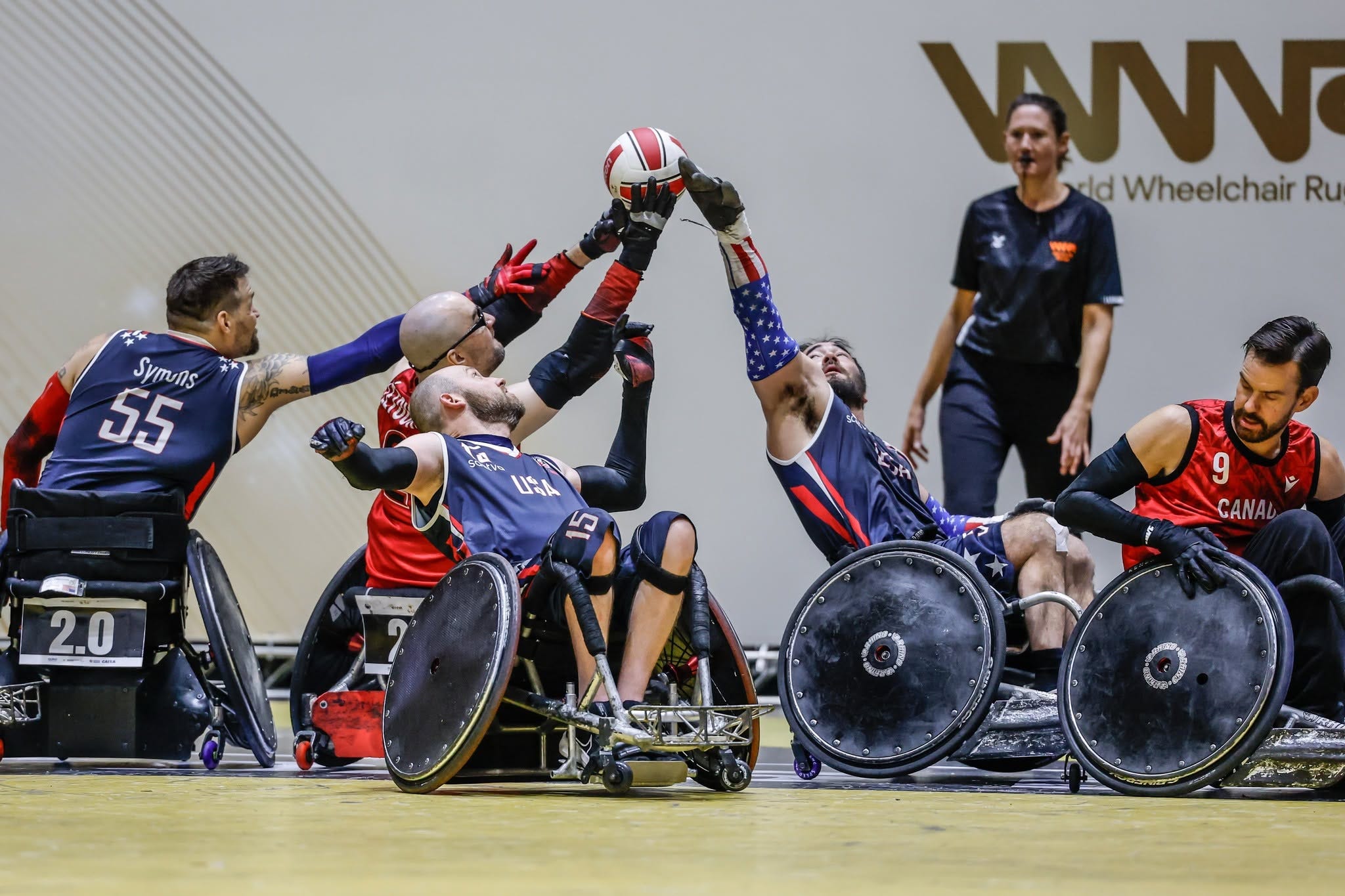
He got back in school right after his release and worked hard enough to graduate on time with his class. And in that same rehab gym in Denver, somebody wheeled a group of grown men through on a demonstration of a sport back then still called Murder Ball, chairs built like small tanks, wheels cambered in at a harsh angle, full contact, half war and half joy, something straight out of a set from a Mad Max movie. Josh watched it and leaned forward in his chair for the first time since the accident. Twenty-two years later he is three days into a World Championship in Brazil, and I am blessed to be sitting in these stands with a water bottle and a phone I should have charged more carefully, watching him do it again.
On the Table
There is a real body of research behind what I watched happen to my son, and to us, in the years after that hospital. Psychologists Richard Tedeschi and Lawrence Calhoun coined the term posttraumatic growth in the mid-1990s to describe something they kept hearing in interviews with people who had survived serious injury and loss: change that goes beyond simply getting back to normal, a genuine shift toward deeper relationships, a clearer sense of what matters, and a kind of personal strength that was not there before the crisis forced it into being. It does not erase the crisis or make it worth having happened. It just says something true and studied, that people, more often than we expect, do not merely recover from the worst thing that ever happened to them. Some part of them gets built by it.
In Good Company
Watch: Murderball (2005), the Oscar-nominated documentary that follows the U.S. wheelchair rugby team through the sport’s early years and toward the 2004 Paralympic Games. It is blunt, funny, occasionally profane, and the furthest thing from a gentle inspiration reel. It is also, as it turns out, the exact film that introduced a lot of players to this sport in the first place. Streaming free on Tubi.
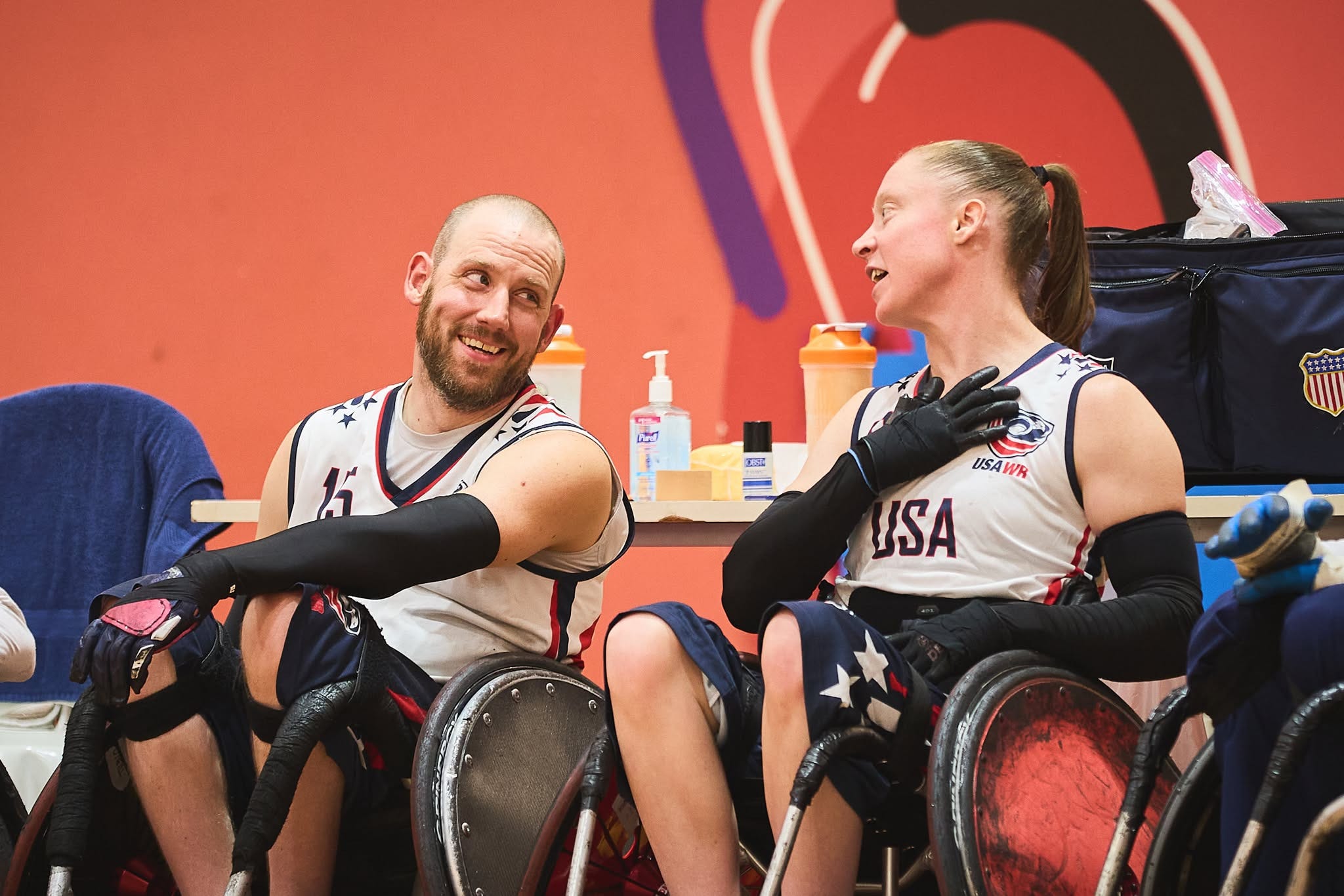
A great reel and brief 30s insight into some of what goes on in wheelchair rugby. Team USA Mic’d up featuring Kory Puderbaugh.
Read: Man’s Search for Meaning by Viktor Frankl. Written decades before Tedeschi and Calhoun had a name for it, Frankl was already describing the same thing from the inside, how a person finds a reason to keep going when the ground has been taken out from under them. Short, plain, and still the clearest thing I know of on the subject.
Listen: United on Wheels, the episode featuring Seth McBride, a three-time Paralympic medalist in wheelchair rugby and editor at New Mobility Magazine. He talks plainly about the sport and the life around it, no polish, which is exactly what I wanted to hear sitting in these stands this week.
“Everything After” I wrote the lyrics from my journal notes and substack story. Suno produced the song.
A Quiet Note
There is more to this story than one issue can hold, Paris two years ago, a Paralympic medal, and whatever happens here in São Paulo before I fly home. That fuller version, with postcards from my photos, a fine art print, and a recipe card, is headed for Unhurried Letters instead, a slower kind of telling for a story that deserves one. If that sounds like something you would want mailed to you or someone you love, it lives at unhurriedletters.com.
Leave the Light On
Twenty-two years is a long time to stay devoted to anything. Josh did not choose that gym, that chair, or that first demonstration of a sport nobody around him had heard of. He chose everything after it, every practice, every season nobody back home was watching, the long unglamorous stretch that never makes a highlight reel. I thought about that walking out of a museum with my own family’s painting still folded in my pack, on my way to watch him do, in a stadium in Brazil, the thing he started choosing in a rehab gym in Denver twenty-two years ago.
Keep making, keep growing, be you.
Tio
“It felt like someone opening a door in a room that had gone dark.” -Tim ONeill
References
References
Tedeschi, R. G., & Calhoun, L. G. (1996). The Posttraumatic Growth Inventory: Measuring the positive legacy of trauma. Journal of Traumatic Stress, 9(3), 455-471.
Rubin, H. A., & Shapiro, D. A. (Directors). (2005). Murderball [Film]. THINKFilm, MTV Films, Participant Productions.
Frankl, V. E. (1946). Man’s Search for Meaning. Beacon Press.
United Spinal Association. United on Wheels: The Wheelchair Lifestyle Podcast, episode featuring Seth McBride.
One-Click Check-In
If you want to read this later or find other issues, you can find them here or hit subscribe.