
Living by Making | Issue 27
What an awesome week. I put together a statement of use specific to AI. I need to get it on the blog and on substack so people can see exactly how I put my writing together. It is not AI, but I do use AI for editing and, for me, especially grammar. I stink at grammar. I had an amazing English teacher but sadly no interest at all at the time. Having said all of that I love working analog both writing and creating art. There is something more pure in picking up a pen at scribbling in my journal and notes cards every day. I am super exicited that I found a “system” that will help to categorize and find threads from my daily notes and journal. Zettelkasten. Not new to many of you I am sure but man, I am super excited to learn this, it is just what I have been looking for to allow me to move even further to slow, analog creation. More on this coming I am sure.
At the Workbench
Jhon and I drove to Cozad, Nebraska last week for a specific purpose, not a museum trip. We were to pick up Waters of Life, an IMPACT show, and haul it ninety miles the other direction for a curator who was expecting us on schedule. IMPACT is a small circle of Nebraska artists, international exhibition history and publication credits required among other things, so the show itself was not nothing. It rained on and off the whole drive, the kind of rain that feels fine on your arms and terrible in your stomach when everything you’re carrying is on canvas, paper or board.
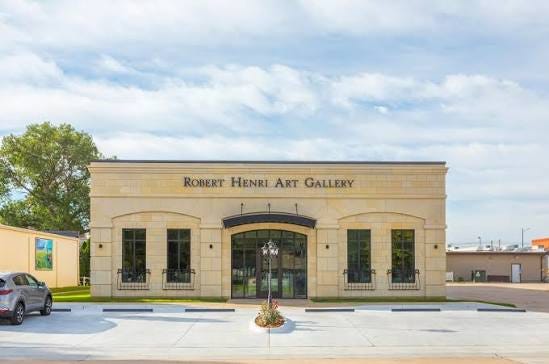
We loaded through the back, since that’s where you load a truck, and I had never seen this building. The gallery is new, finished within the last year, and every trip in gave me another few seconds of a foyer I wasn’t planning to stop in, paintings I didn’t recognize, work that had entered the collection since my last visit. We had another curator waiting ninety miles away. We loaded the last box, looked at each other, and pushed the whole schedule back anyway, because the docent walking us through. Our docent, a studio art student four years into turning herself into a Robert Henri scholar purely because she kept reading, said the words, “no one connected the artist to this town for seventy years”, and I wanted the story again. Jhon had never heard it.
Under the Surface
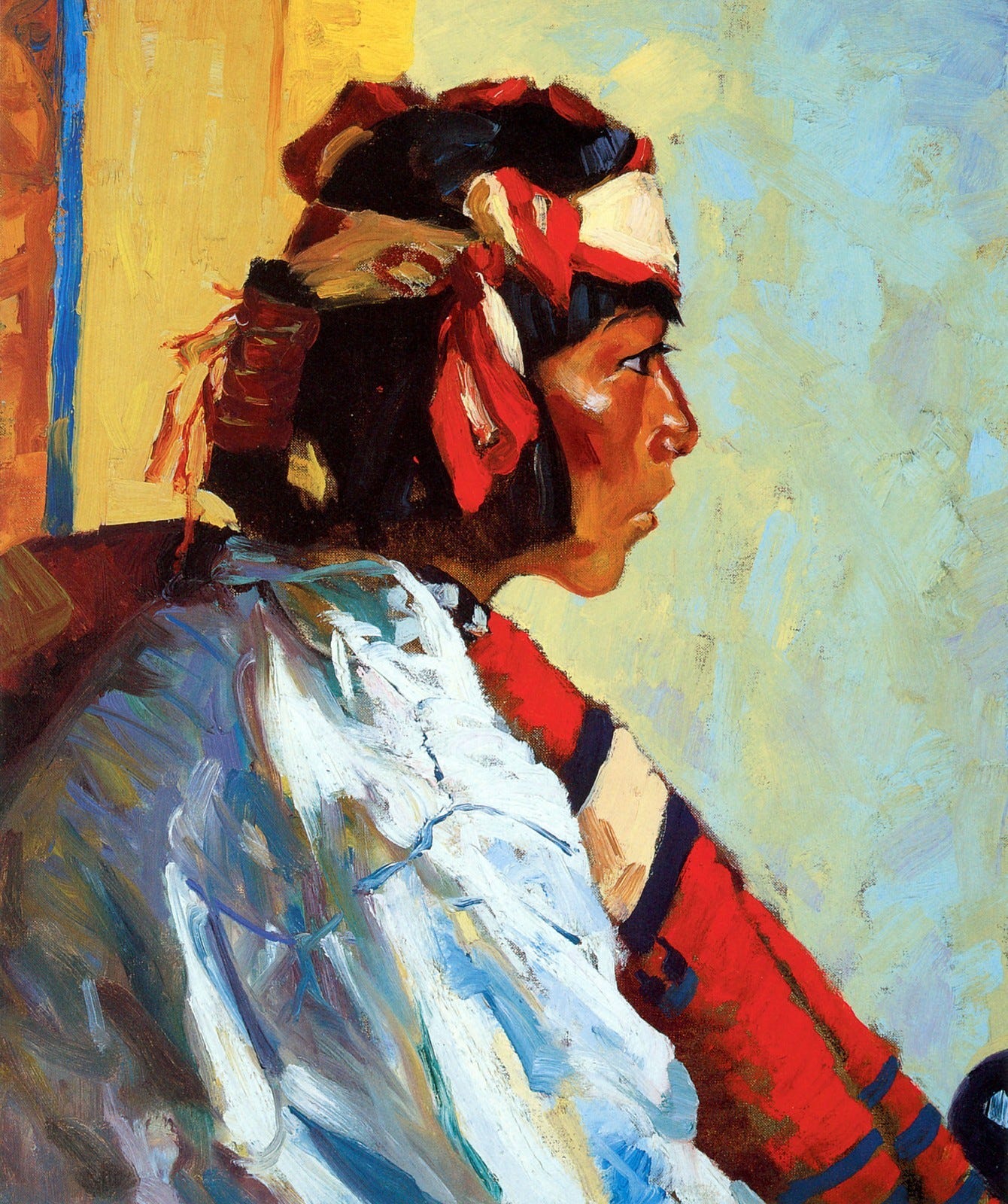
Here is the sentence. Robert Henri, one of the most influential painters and teachers in American art, spent his whole adult life letting the world believe he had no connection to a small Nebraska railroad town. Nobody put it together until the 1950s, decades after he died. The reason took some digging.
In 1872 a professional gambler named John Jackson Cozad, banned from card rooms across the country for being too good at faro, got off a train at the 100th meridian marker in the middle of the Nebraska plains and decided, right there on the tracks, to found a town. He wanted it clean and prosperous, no drinking or gambling allowed inside its own limits, which is a strange thing to legislate against when cards built your fortune, and the 50,000 dollar seed money that purchased the initial 20,000 acres game from a faro game in Omaha. For a decade it mostly worked. Then in 1882 a fight over grazing land with a rancher named Alfred Pearson stopped being a fight over grazing land. Cozad drew a pistol and shot Pearson in the face. Pearson lived two more months before the wound killed him, and by the time it did, Cozad was already gone, convinced a rope was waiting for him even though a jury would later acquit him. He borrowed a horse and rode for Denver in the dark. His wife Theresa stayed behind long enough to sell what she could sell, then sewed the money into the lining of her skirts and into the pockets of her teenage son’s coat before the family slipped out of the town her husband had built and named after himself.
Every one of them changed their name. John Cozad became Richard Henry Lee. His son Robert Henry Cozad became Robert Henri, and for years let people assume he was Lee’s adopted son rather than admit whose blood he carried. That secret held for the rest of his life and for decades after it, right up until a Nebraska historian finally traced the threads back and asked the question nobody had thought to ask, whether the famous painter and the vanished gambler’s family were the same people.
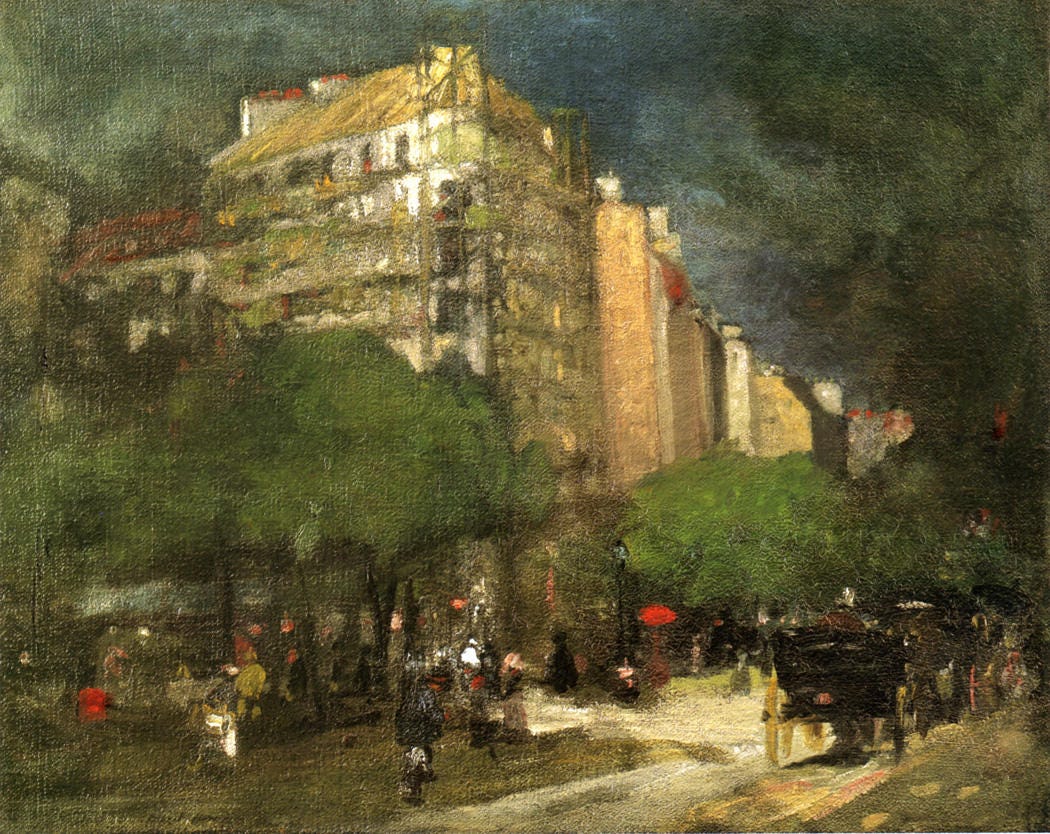
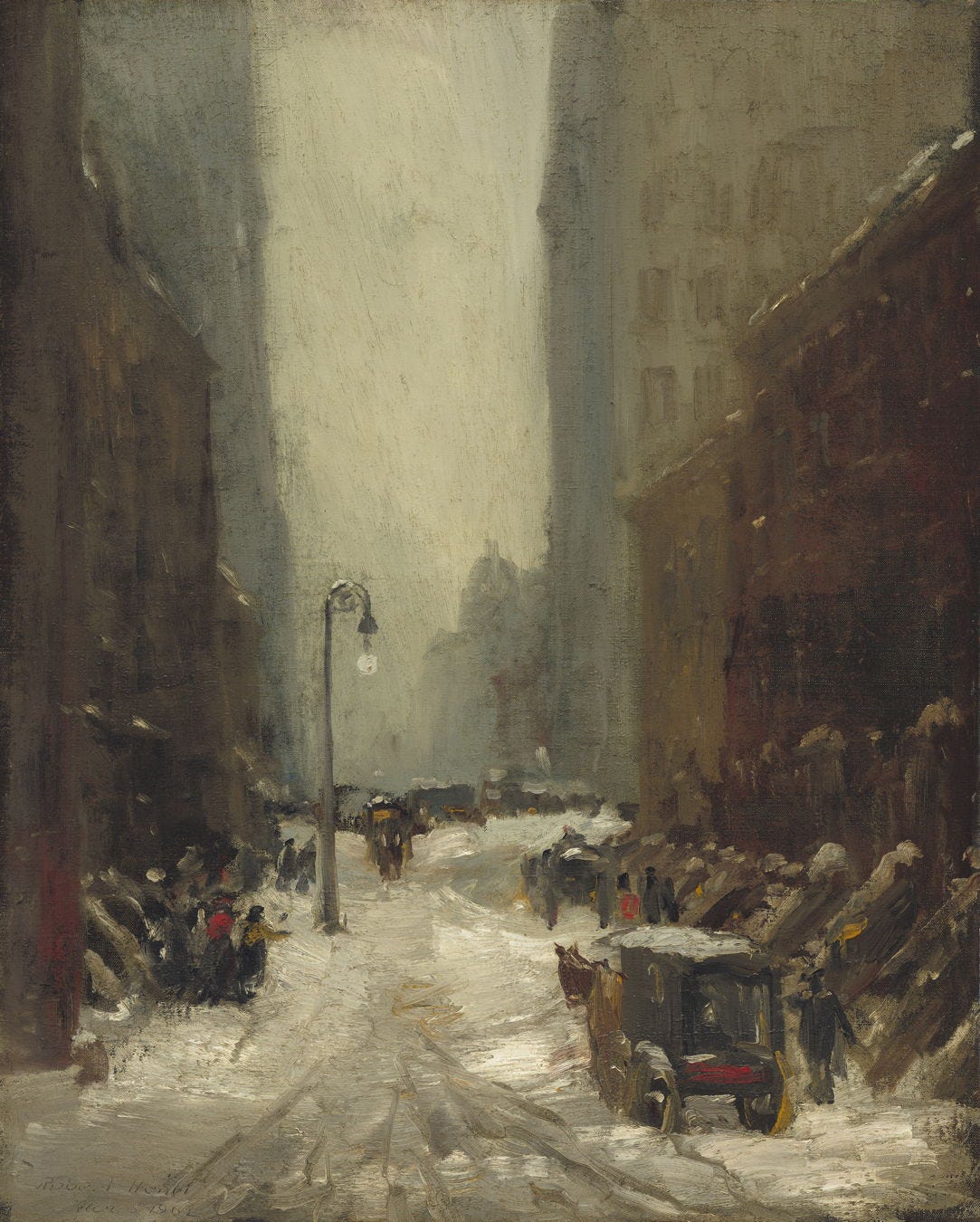
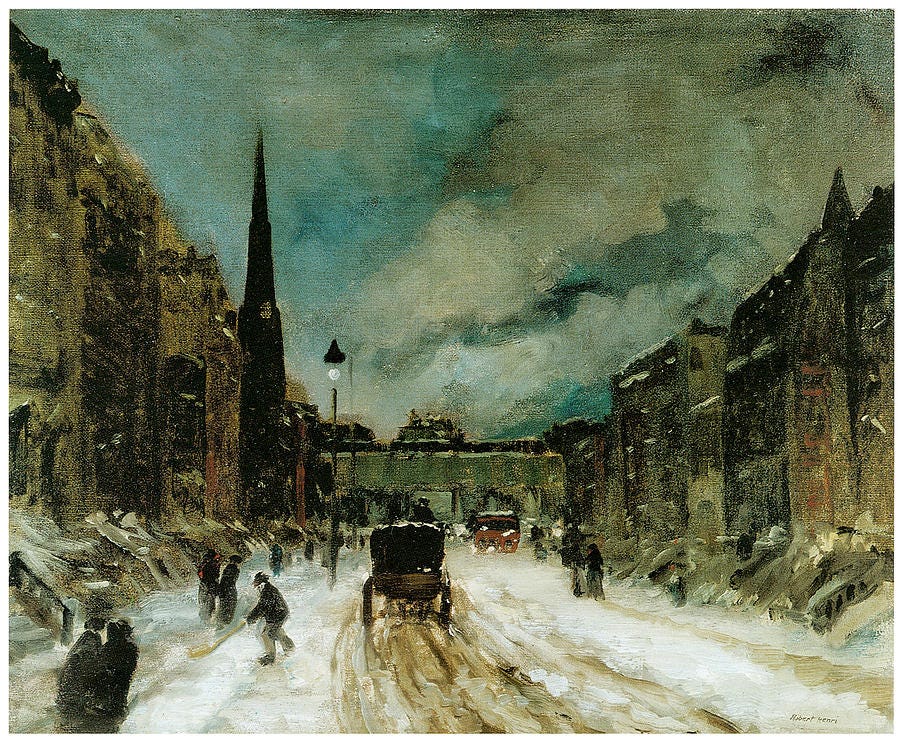
Here is the part that has nothing to do with murder. Henri grew up to despise exactly the kind of gatekeeping that had once decided his father’s fate, respectable people deciding who belonged and who didn’t. The National Academy of Design controlled American art the way the Paris Salon had controlled European art a generation earlier, and just as the Impressionists had broken from the Salon’s velvet rope, Henri broke from the Academy’s. He organized a rebel show in 1908 with seven other painters, an open middle finger to the institutions that kept rejecting work about tenements, washwomen, and ordinary city streets instead of the polished drawing rooms academic painting preferred. Critics mocked them as the Ashcan School, meant as an insult, trash cans and gutter subjects, not real art. Henri’s circle kept painting exactly that. The son of a man who ran from what respectable people thought of him grew up to build his entire career refusing to run from it.
Studio Notes
I have spent most of my working life getting some version of the same advice Henri would have recognized instantly. Find a lane. Make yourself easy to categorize. Pick a medium and stay in it so galleries know what shelf to put you on. I never could. Photography that turned into painting that turned into digital work that turned into whatever the piece in front of me wanted to be that week, resin, wood, fiber, synthography. It is a body of work that refuses to file neatly under one heading no matter how many well-meaning people have told me it would sell better if it did. There is a version of gatekeeping in the art world that has nothing to do with murder and everything to do with tidiness, and Henri spent his whole teaching career telling students to ignore it in favor of painting what was actually true in front of them.
Standing in a gallery that didn’t exist the last time I visited, listening to a twenty-something intern who had made herself an expert on a man dead for almost a century simply because she found him interesting enough to keep digging, I felt the same permission Henri handed his own students. Nobody assigned her that expertise. She built it because she wanted to. Jhon starts his own classroom this week for the first time, five days, all day, no committee deciding what he’s allowed to be curious about in front of thirty teenagers. I hope somebody tells him what Henri told his students, look at what’s there, not what you were taught you’re supposed to see.
On the Table
Name one rule you’ve been quietly obeying that nobody is enforcing anymore, a lane you were told to stay in, a medium you were told to pick and stick with, a version of yourself you’ve kept tidy because it seemed easier for other people to categorize. This week, break it on purpose, in something small. You don’t need a manifesto. Henri didn’t start with one either. He just kept painting what others considered ashcan art.
In Good Company
Watch: "Deep Dive into Robert Henri: Artist, Painter, Teacher," the Art Students League's interview with Peter Osborne, the museum's director, filmed inside Henri's actual childhood home in Cozad. Free on YouTube, the same building we walked through.
Read: Son of the Gamblin' Man, Mari Sandoz's 1960 novel built from Robert Henri's own Nebraska childhood, the gambler father and all of it, told as fiction layered over documented fact, which felt like the right kind of book to hang out next to a piece written the same way.
Of course I have to mention The Art Spirit, Henri's own collected teachings. This really is a book that should be in every creatives library. (As always these affiliate links are for your convenience. I would strongly encourage you to buy these from your local mom and pop bookseller rather than support another billionaire.)
Listen: The Artful Painter podcast, episode 64, "Robert Henri: A Secret Identity." Host Carl Olson made it while researching an audiobook of The Art Spirit, and it goes straight at the seventy-year secret instead of around it. You can also find Henri’s entire book, The Art Spirit, as a podcast by chapter. Very cool.
“The Name He Left Behind” I wrote the lyrics from my journal notes and substack story. Suno produced the song.
A Quiet Note
If a week like this one is the kind you’d rather receive slowly than read all at once, that’s most of what Unhurried Letters is for. A print, a few words, something that arrives when you’re not expecting it. No pressure either way. It lives at unhurriedletters.com whenever you’re curious
Leave the Light On
The paintings made it to the curator dry and on time. The docent goes back to school this fall, and someone else will be the one telling this story to whoever shows up next with a truck to load. Henri spent his life teaching people to look past what they were told to see. It took the rest of the world seventy years to look closely enough to see him. Some things are worth being patient for. Most of them are worth telling as a story while you wait.
Thank you for being here. See you next week.
Keep making, keep growing, be you.
Tio
“For the entire earth is but a point, and the place of your own habitation but a minute corner in it.” -Marcus Aurelius
References
Art Students League of New York, “Deep Dive into Robert Henri: Artist, Painter, Teacher” with Peter Osborne — youtube.com/watch?v=8KxFN64bq-k
The Artful Painter Podcast, Episode 64, “Robert Henri: A Secret Identity” — youtube.com/watch?v=ZyCIi_PeQUk
The Art Spirit by Robert Henri, full audio, all 17 chapters — youtube.com/playlist?list=PLFkWBebh44CSnIJ_PJ8oJ9eM8eQMlKtzt
Robert Henri Museum, Cozad, Nebraska: roberthenrimuseum.org
One-Click Check-In
If you want to read this later or find other issues, you can find them here or hit subscribe.