
Living by Making | Issue 21
At the Workbench
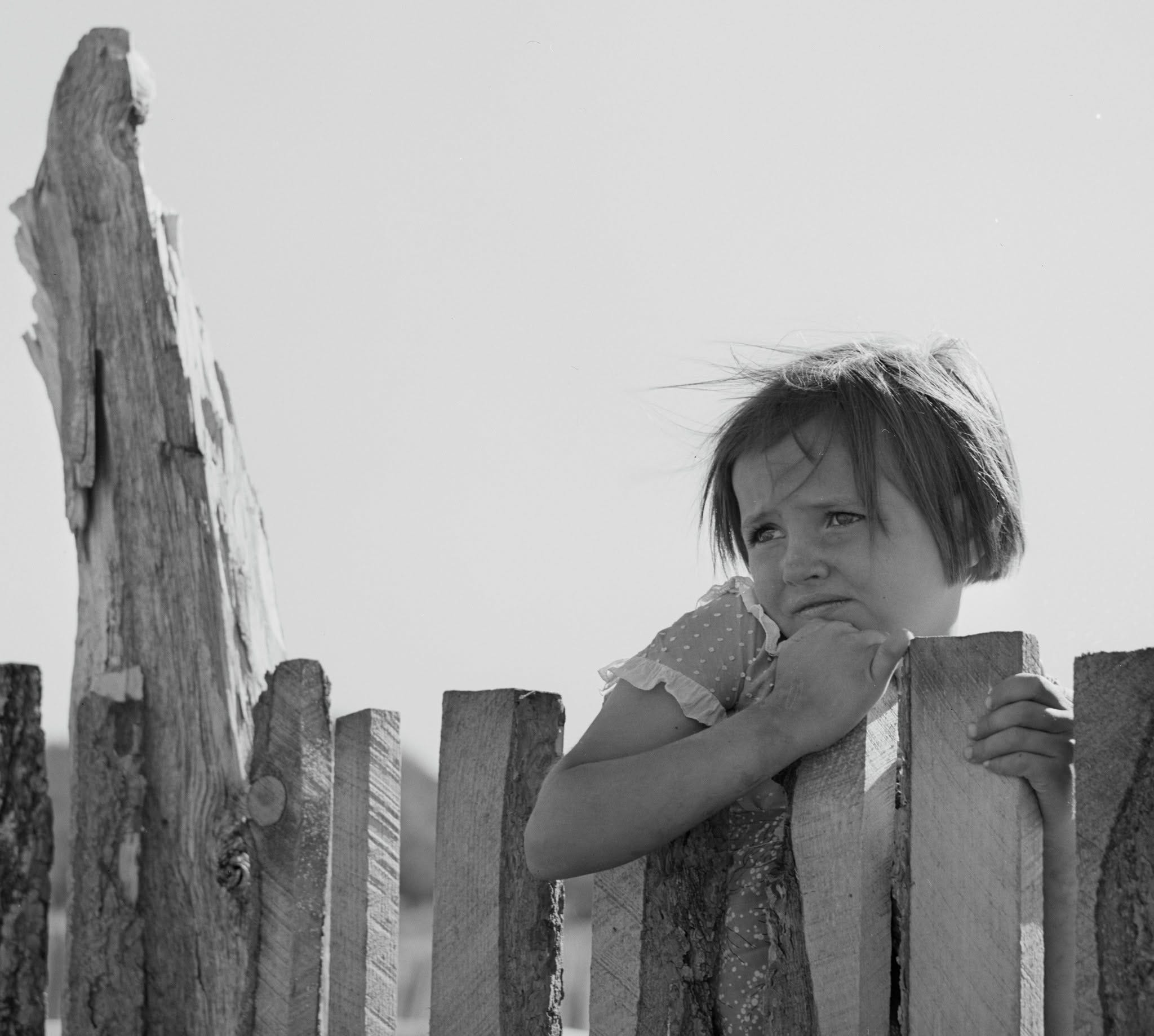
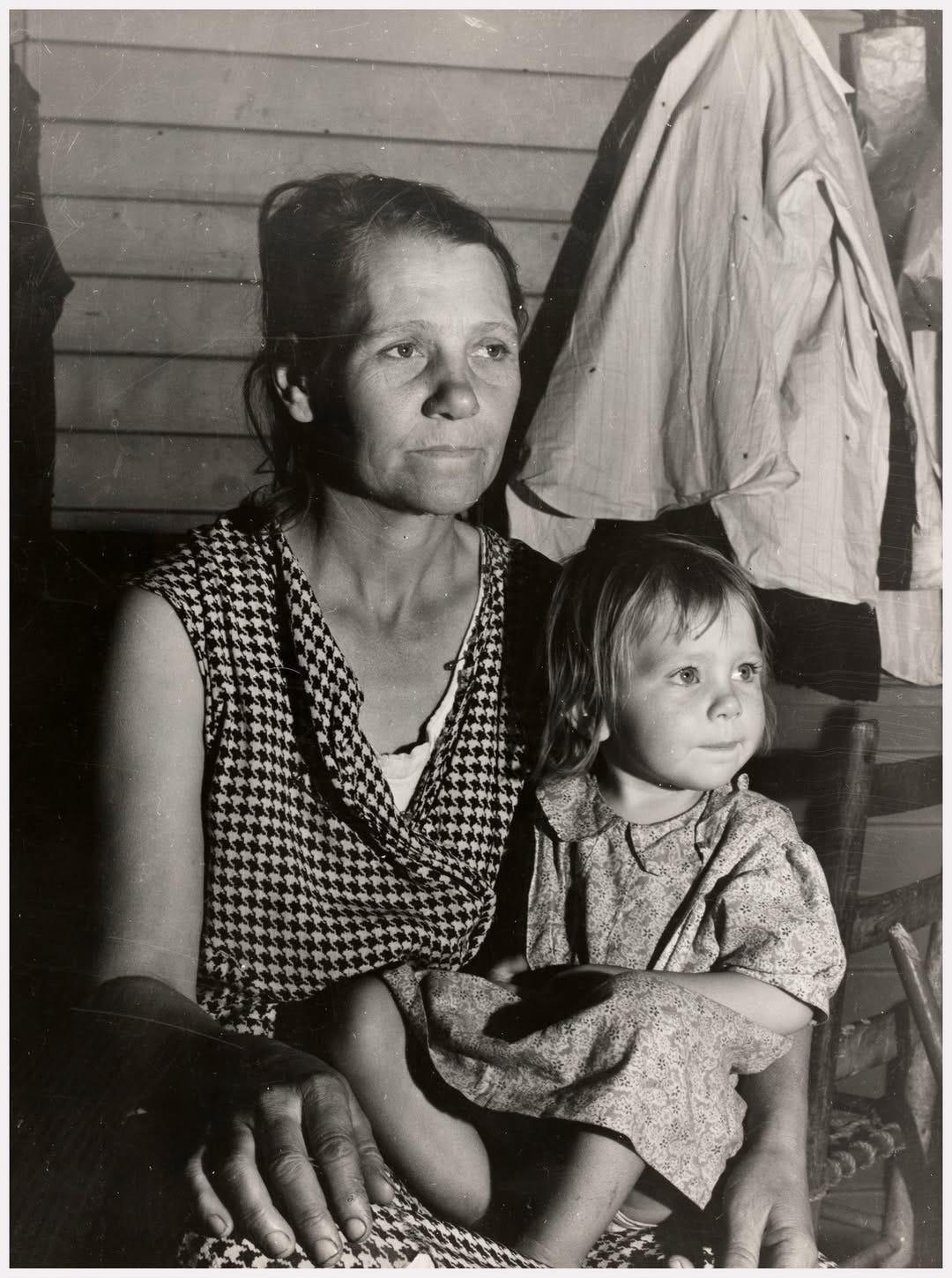
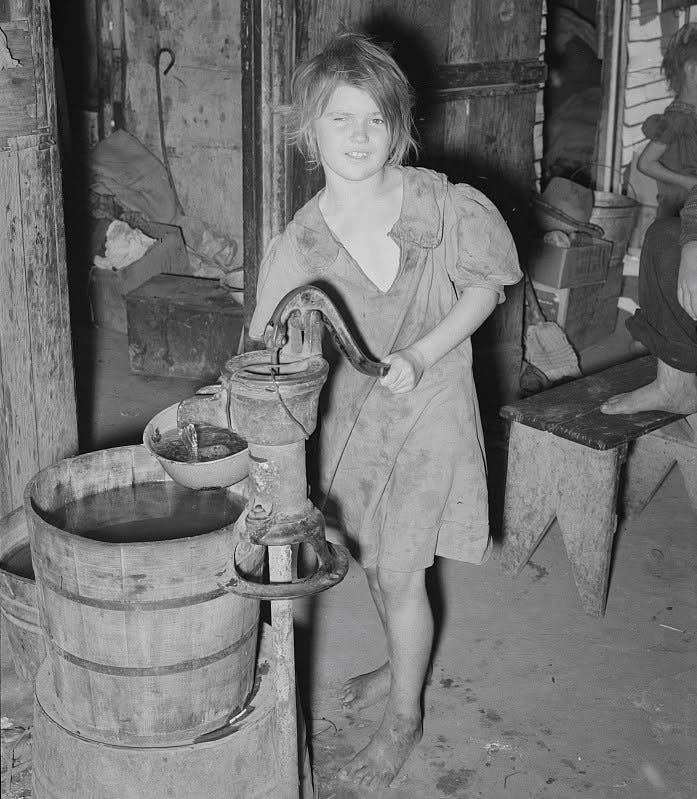
For whatever reason it was a struggle this week to write something I liked. Some days are like that. So, even though I missed the boat, I resolve to show up consistently (I am unraveling that decision in my journal this week.) Some weeks journal and writing are just blah. Kind of like a painting I let go to mud. This piece, I feel, is mud but here we go anyway. Last week I spent some of a week testing many of the hand printing processes from my past against a set of old FSA photographs. FSA photographs are documentary images created by photographers working for the Farm Security Administration during the Great Depression to document rural poverty, migration, and everyday American life. The large format negatives and positives I made from the public domain downloads were tested with cyanotype under the UV unit, kallitype, Van Dyke brown, salt printing, chasing something I couldn’t name and not finding it in any of them. I wrote about that hunt on the studio blog if you want the full account of what didn’t work and why. That post already covers why I actually chose bond paper. What it doesn’t get into is what it means that I picked a material that isn’t built to last, and that’s the part I keep thinking about.
In the middle of that week, unrelated to any of it, I found an old photograph of my oldest daughter leaning against the studio library wall, propped among some unpacked boxes, hand embellished decades ago in conté and pastel, a process I started in the late seventies and apparently never put down. When the bond prints are ready, I’ll bring them home and start working them by hand, and I already know that first pass is going to feel like picking up an old argument I never finished having.
Under the Surface
None of that decision was really about archival anything, at least not on the surface. The real reason arrived a few days later, standing at the sink doing dishes, not thinking about paper or FSA photographs or anything else, when a thought just showed up on its own. Two thirds of the sand is on the bottom of the glass now. Not a number I sat down and calculated, just an hourglass image that arrived fully formed, the kind of math you don’t do on purpose.
I want to be careful here, because that sentence can sound heavier than it is meant to be. I am nowhere near the end of anything, as far as I can tell. There is a long list of people and places and work still ahead, and most days I feel more awake to my own life than I did twenty years ago, not less. But there is a particular kind of awareness that shows up somewhere in your fifties and sixties that was not there before, a low steady hum underneath the ordinary hours. Time is not neutral anymore. It is moving, and you can feel it moving, whether you are ready or not.
That hum tends to bring a question with it. Did I make a difference. What was any of it for. Now what. I used to assume that question was a sign something had gone wrong, some private failure to have it figured out by now. It turns out the question isn’t a malfunction. It’s on schedule.
There is a name for this, it turns out. The psychologist Erik Erikson called it generativity versus stagnation, a stretch of adulthood built around this exact question, keep contributing or start coasting. I did not go looking for the term. I ran into it after the fact, and there was something steadying about seeing it named, not because it explained the feeling away, more because it meant I had not invented it out of nowhere. Maybe that is just me finding a fancy word for something everybody already knows by fifty. Probably. I still liked finding it.
Simone de Beauvoir was thinking about the same territory a different way, in a book called The Coming of Age. Her argument, more or less: old age only turns into what she called a parody of life once you stop pursuing anything that gives your days meaning. Not permanence. Just staying attached to something outside yourself, work or people or a cause, something strong enough to keep you from turning inward and stopping there. I do not think the drive to matter is the flawed part. I think the flawed part is assuming it has to look like a monument.
For months I had been drawn to the opposite of all that, without understanding why until this piece came together. Back in February I was experimenting with anthotypes for a completely different project, plant based emulsions that fade under the very light that formed them. I liked the temporal nature of it at the time, slow art that also gets to end. You can scan a print and save the file, but the original is going to fade the way the plant that made it faded, the way we all will too. I did not think much more about it then. I just kept the thought sitting there.
Bond paper is doing the same work with different material. The original Lange and Evans negatives are kept the way archives keep things, climate controlled, cataloged, the actual paper locked away and untouched while the rest of us just access digital files. Working from plain bond is the opposite choice, on purpose. My version was never trying to be archival. It is going to amber and yellow and carry the mark of every year I keep touching it, aging the way a working object ages instead of the way a preserved one does.
I can already feel the discomfort waiting in that, putting my hands on someone else’s witness, printing faces I did not take, working them over with my own materials, knowing my version will not outlast me either. I do not expect that discomfort to go away once I actually start. I am not sure I want it to. The plainest paper in the building is not a claim that I am improving anything those photographers made. It is just a way of staying in the conversation instead of sealing it shut.
Maybe that is the actual answer to two thirds of a glass of sand, not to build something that outlasts it, but to keep my hands in the part that is still falling.That is the card stock. That is the t-shirt pricing. The goat was already finished the moment I laughed. The joy did not need a product line to justify itself. But forty years of making a living from whatever I love, forty years of the reflex that says if you love it then figure out how to sell it, that is a deep groove. It does not wait for permission. It does not even announce itself. It just starts running, the way my old travel planning used to run, mapping the route before I had decided whether I even wanted to take the trip. The planning replaces the experience. The product replaces the painting. And you find yourself three animals into a series before you have finished standing in front of the first one.
Studio Notes
Three weeks left on a table I’m building for my daughter. She moves at the end of July, and I wanted this to be finished and in her hands before the truck shows up, not shipped later as an afterthought.
Six weeks out from some travel. My son is playing for Team USA at the World Wheelchair Rugby Championships in Brazil next month, and I’ll be there watching. Planning starts now, flights, logistics, all of it, and I’m not even a little bit bothered by the paperwork this time.
The farm animal series is still going in the background too, low pressure, no name for it yet beyond what it obviously is. The Emotional Support Goat started it, and Life Coach Pig Winston has been keeping him company on the easel most weeks since.
On the Table
A small, completable thing.
Skip the bucket list this week. A bucket list points forward at things not yet done, which is its own kind of permanence chasing. Instead, do two things. First, write down three moments from the last year where you kept something going rather than starting or finishing it. A relationship you tended. A skill you kept practicing past the point of novelty. A piece of work you returned to instead of setting aside for good. Second, cut five small cards and write one continuation act on each. Water something. Mend something. Call the person you have been meaning to call. Sketch for five minutes. Read one page of the thing you stalled out on. Shuffle them. Draw one each morning this week and just do the card. No plan beyond that.
In Good Company
Watch: In 1963 a man named Jerry Gretzinger started doodling a map of an imaginary city to get through a tedious job. He set it aside in 1983. Twenty years later his son found it in the attic and asked what it was, and Gretzinger dusted it off and kept going. The map is now thousands of hand worked panels, and the entire process runs on a deck of instruction cards he built himself, paint this panel, retire this card, do a journal entry, shuffle the deck. He is well into his eighties now and still draws a card most days. There is video of him at work at jerrysmap.com.
Read: Simone de Beauvoir’s The Coming of Age. Dense, but worth reading slowly, highlighter in hand. You can order it at most of your local bookstores. Support mom and pop businesses first. If you can’t get it locally, here is an affiliate link for your convenience. https://amzn.to/4eFWK9F
Listen: On Being with Krista Tippett, the 2015 conversation with Mary Catherine Bateson called “Living as an Improvisational Art.” She calls the extra decades most of us now get after fifty “active wisdom,” a genuinely new stage of life, not an extension of old age tacked onto the end.
A Quiet Note
Unhurried Letters is built around the same instinct this issue keeps returning to, that some things are worth making even though, maybe especially because, they will not last forever in their original form. A handwritten story, a limited edition fine art print, a recipe card, each one made once and sent once for you to open slowly and take 20 minutes, just for you. You can learn more at unhurriedletters.com.
Leave the Light On
The sand does not care whether you build a monument or a mandala. It does not care whether you shuffle a deck of cards for sixty years either. It is going to keep moving regardless. The only real choice in front of any of us is whether our hands are in something while it does.
Tio
The sand doesn’t care whether you build a monument or a mandala.
One-Click Check-In
If you want to read this later or find other issues, you can find them here or hit subscribe.