
Living by Making | Issue 22
At the Workbench
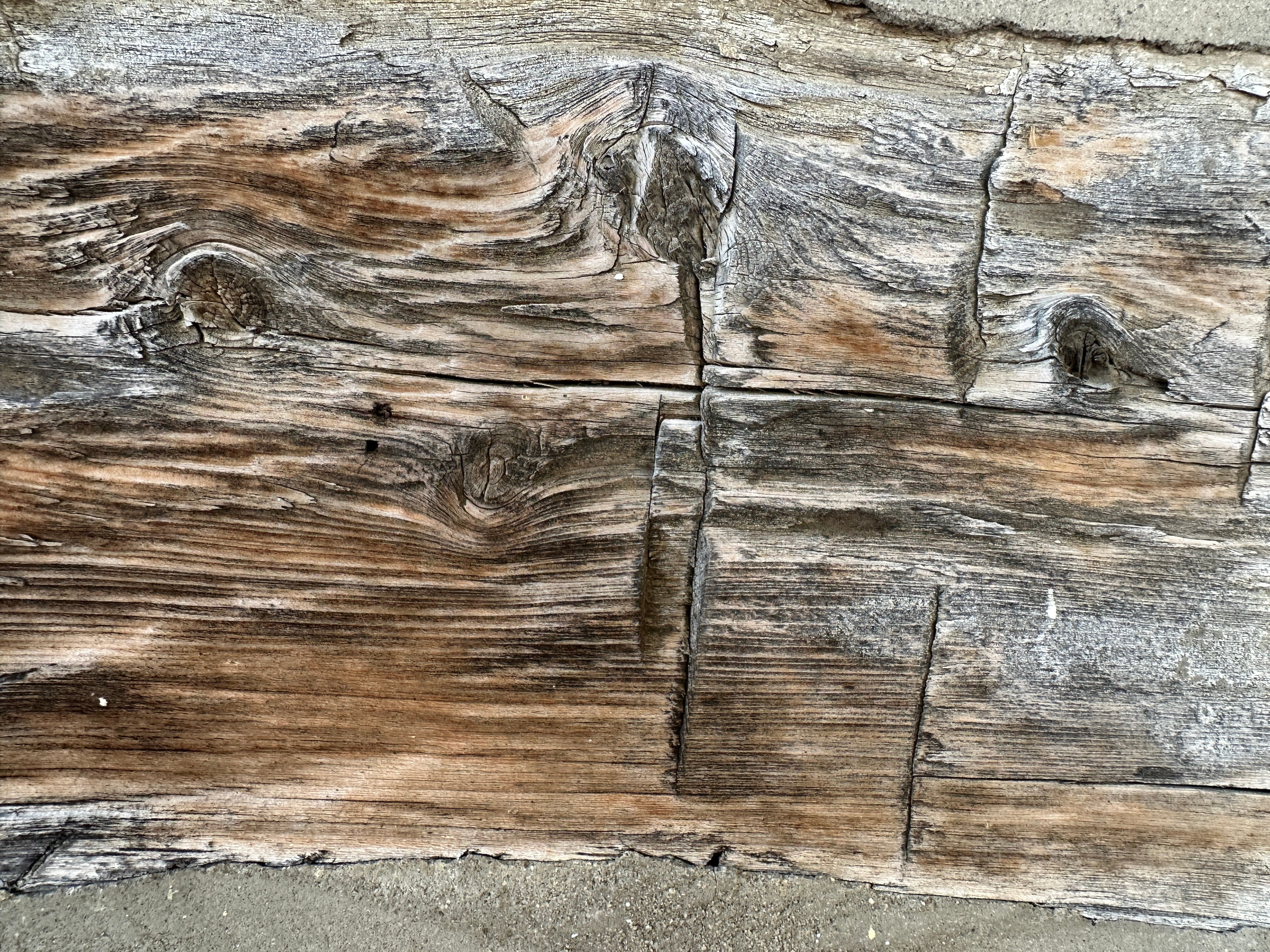
Acorn shells and walnut husks crackled underfoot on the gravel path as I walked toward the Erickson house, first homesteader in Lincoln County, less than half a mile from home at the Lincoln County Historical Museum. I put my hand against the logs first, rough, hewn, charred in places, weathered into every uneven edge a tool had left behind. Then I found the chinking between them, smooth, packed tight, sealing every gap the logs left open. Two different textures doing the same job of holding up a house, one rough enough to leave a mark on your hand and one smooth enough to disappear into it. The texture of living, right there under my palm.
A whippoorwill called somewhere off through the breeze, and a meadowlark answered it, that particular flute of a sound that belongs to nothing else. Cottonwood was already snowing its summer bounty, early by the calendar but generous anyway. Abundance everywhere, in the cabin and out of it. I stood there a while, on the day the country turns two hundred and fifty, before I noticed the house wasn’t finished with me yet.
Under the Surface
Standing there, it struck me that the cabin itself was telling the story of a life. The hand hewn logs are the hard parts, the difficulties everyone notices because they cannot help but notice them. The chinking is what seals it, the sweeter parts, packed in close enough to keep the weather out and whatever else a house needs kept out, duties I couldn’t fully name standing there but understood anyway. Friendships work that way too. So does family, and grace, and the thousand ordinary kindnesses that never make it into a history book but somehow make history possible anyway. Neither one holds up the house alone.
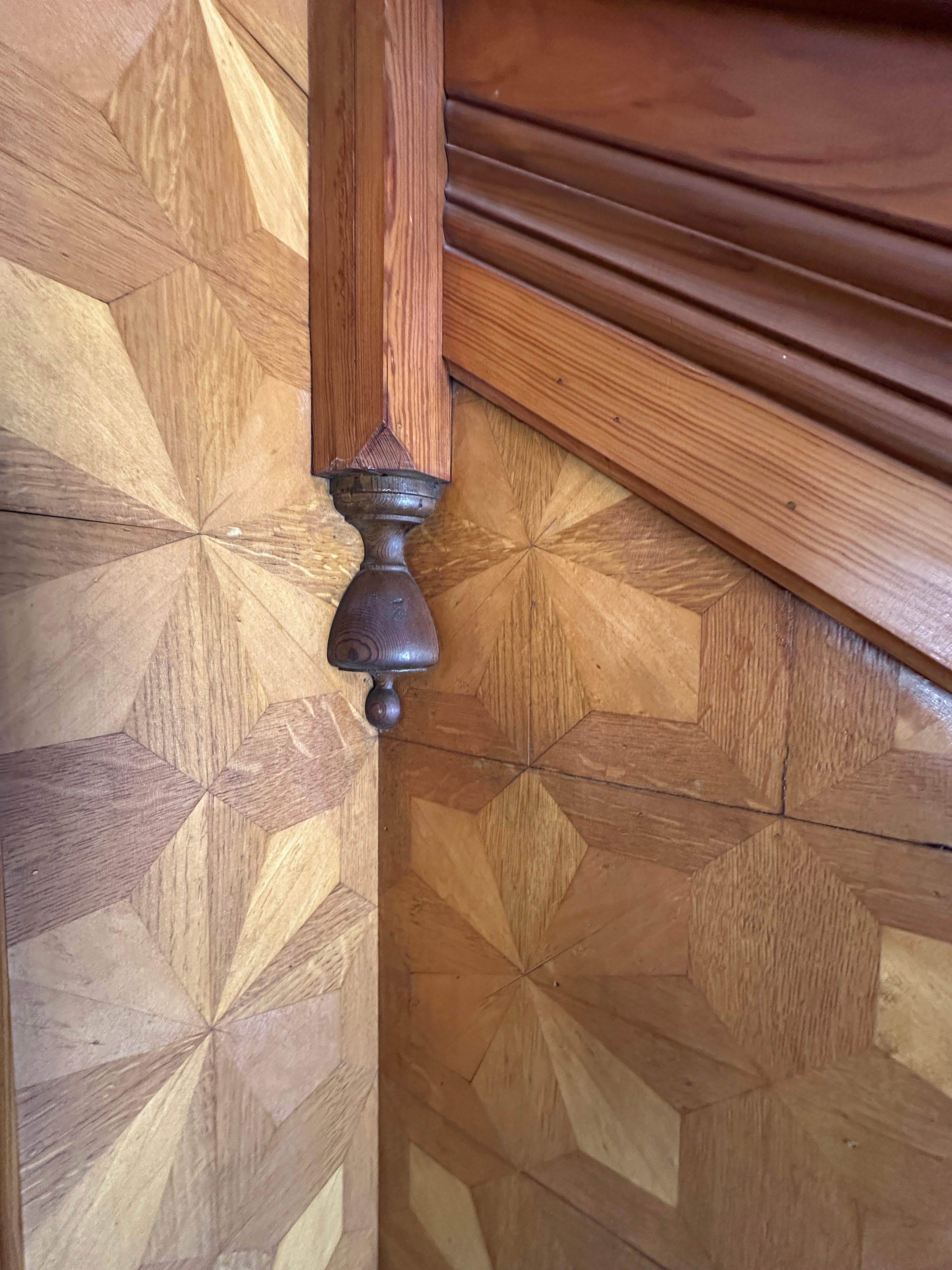
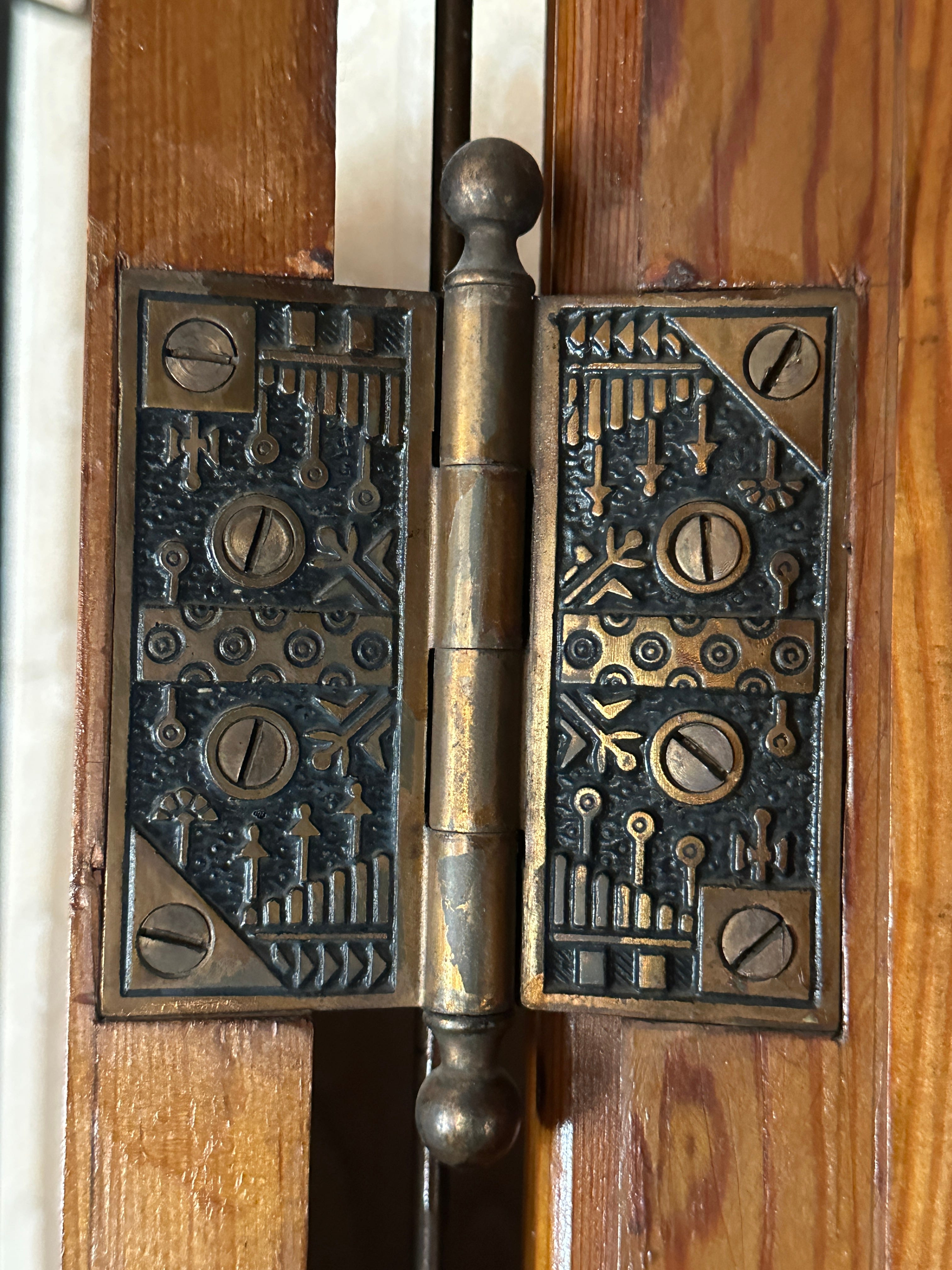
A little further down the grounds, a second house, the Fredricson place I believe, ordered whole from the Sears and Roebuck catalog in 1899 for twenty three hundred dollars. Stained glass, thick oak trim, turned balusters on the stairs, marquetry worked into some of the decorative areas on the walls, all of it cut and set and finished by hand. What I kept coming back to were the hinges on the doors, stamped or forged, I couldn’t tell which, decorative either way. They are hinges. Nobody sees them once the doors are hung. Somebody gave them a shape worth admiring anyway, small pieces of art built into something that disappears the moment they do their job. Making has never really been about utility alone.
Everything I touched that afternoon had been left behind by somebody else, the cabins, the tools, the craftsmanship, even the museum itself, standing because someone decided the story was worth keeping. None of it belonged to me. All of it had become part of my life simply because I arrived later. Maybe that’s what the country’s two hundred and fiftieth really asks of a person, not fireworks so much as inheritance. Not money. Responsibility.
Studio Notes
Elise’s table is starting to feel like it has more days behind it than ahead of it. A few small holes to fill before the flood coat goes on the bottom, then a channel to rout for the steel support that nobody will notice once it’s set, a box to build underneath that holds the whole top in place and will never be looked at again once the table is standing in her house doing its job, and finally one last topcoat on the surface itself. Nobody will run a hand along the underside the way I ran mine along those hinges.
Dad always taught us to figure things out on our own, not to borrow tools or anything else from people if we could help it. On the rare occasion we did borrow something, it went back better than it came, a small repair made first if it needed one. If the unthinkable happened and something got broken, lost, or stolen, you replaced it immediately with the best quality you could find, even if you couldn’t really afford it. Simpler times, maybe. But standing in that homestead house on the day the country turns two hundred and fifty, it felt like more than a rule about tools. It felt close to the whole reason anyone forges a hinge nobody will see, or fills a hole in the underside of a table only the table will ever know about.
I came home with more photographs of texture than I meant to take, the way I always do. And somewhere in all of it, I saw an old friend. That’s what I’ll paint this week.
On the Table
One footnote from the museum that stuck with me: the standard homestead land grant was 160 acres, but out in the Nebraska sandhills that never worked. Normal ranching and farming techniques don’t hold up in sandy soil, so eventually the grant here was raised to a full section, 640 acres, just so a family had a chance at making the numbers survive. Even the government eventually admitted the land needed different rules than the ones written for everywhere else. Worth remembering next time a method you inherited stops working and the answer isn’t to try harder at it, but to change the size of the problem.
In Good Company
Watch: Frontier House (PBS, 2002), a six-part series that put three modern families on real homesteads in Montana to live as 1880s settlers would have, working with only the tools and skills of the period. It’s not romantic about it. The show doesn’t flinch from how hard the work actually is or how thin the margin for survival was, which is exactly the kind of unglamorous inheritance this issue keeps circling back to. Free to stream on pbs.org.
Read: Wendell Berry’s The Unsettling of America. Berry has spent decades writing about land, husbandry, and the difference between working a place and merely using it. He argues that care and craft aren’t separate from the land, they’re what keeps a person in right relationship with it. It’s the closest thing I know to a book-length version of the hinge. First choice would be to buy the book from your local mom and pop book store. If that doesn’t work the link is for your convenience. (NOTE: that is an affiliate link from Amazon. My understanding is that substack penalizes us for using them. Thats ok, I am not doing it for the pennies that it might earn. I am doing it to save any reader some time)
Listen: 99% Invisible just launched a new series called A History of the United States in 100 Objects, timed to the country’s 250th, hosted by Roman Mars. Each episode takes one physical object, a coin, a screw, a schoolbook, and follows the history hidden inside it. It’s the hinge idea turned into a whole show, and the timing couldn’t be better this week.
A Quiet Note
Unhurried Letters is built around the same instinct this issue keeps returning to, that some things are worth making even though, maybe especially because, they will not last forever in their original form. A handwritten story, a limited edition fine art print, a recipe card, each one made once and sent once for you to open slowly and take 20 minutes, just for you. You can learn more at unhurriedletters.com.
Leave the Light On
You will make things this week that nobody sees. A seam sanded flush, a hole filled and hidden under a coat you already know is coming, a hinge nobody will ever notice was stamped instead of just poured out cheap. Do it well anyway. That may be the quietest kind of inheritance there is, whether it’s a nation, a family, a friendship, or a studio, receiving something with gratitude, improving it where you can, and handing it on a little better than you found it.
Stamped or forged, decorative either way.
Tio
"You are not doing it for the door."
One-Click Check-In
If you want to read this later or find other issues, you can find them here or hit subscribe.
Tim, your words are always so evocative, I feel like I’m there seeing the table, the hinges, etc. Feeling like a failure because I can’t figure out how to fix a painting that looked perfect in my head and turned out just so wrong🫤 Started another which is going much better. Your words encourage….thanks for the pick-me-up👍🏻❤️✨