
Living by Making | Issue 12
At the Workbench
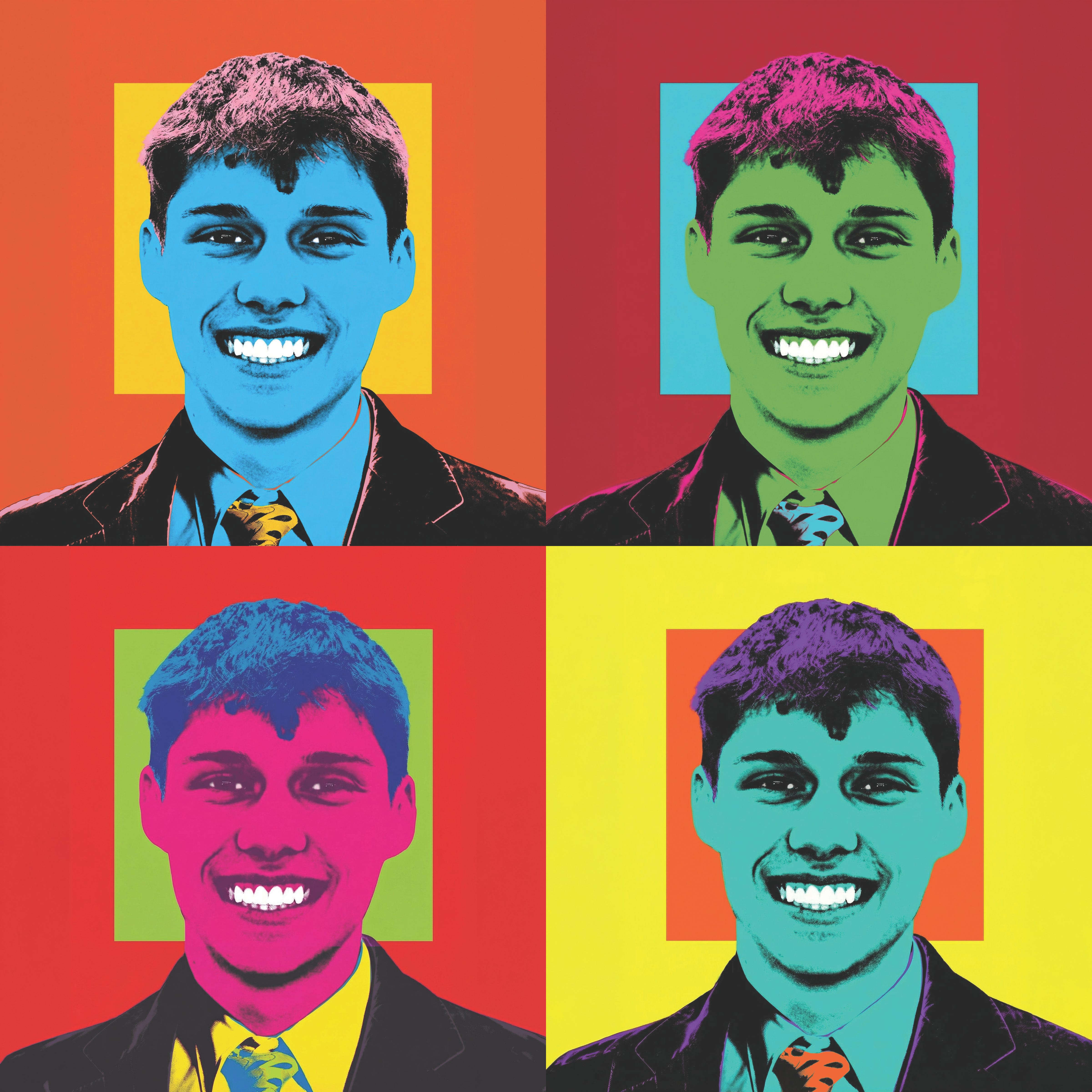
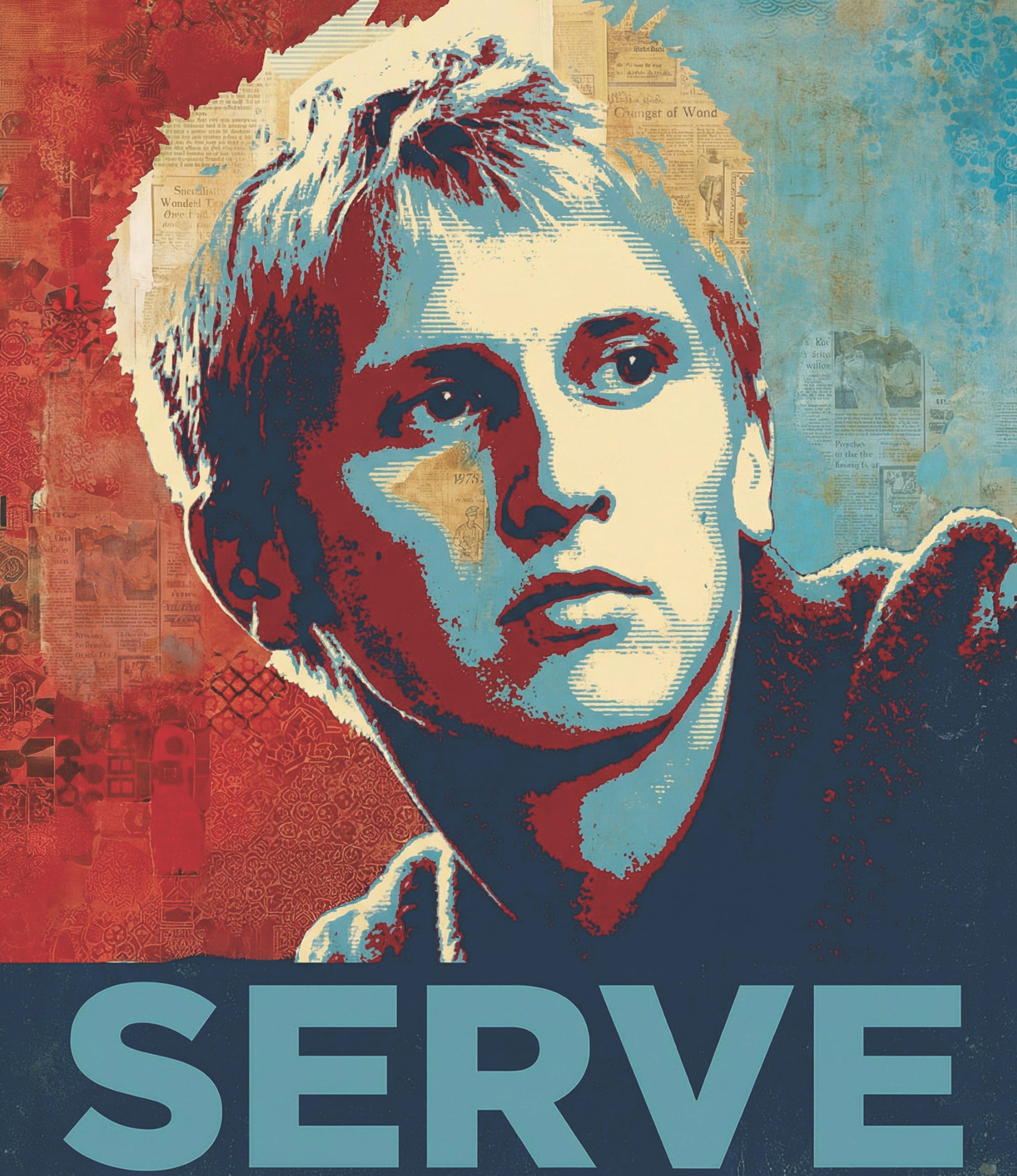
Here are the active projects scattered throughout the studio or on my workbench this week. Seven portraits of state cross country medalists I have coached. Each one in a different artistic style. Some are works in progress, some are still just an idea waiting for time. They are going on the wall in the art room at school. The base to a table I am building for my daughter Elise as a wedding gift. A few last repairs before paint. The top is a long way from ready, still needs considerable work before resin.
And there’s more, the first test gum oil print from a series called Common Ground. All public domain images, all printed in gum oil or some other alternative photographic process. A hodgepodge of plant material for eco printing on silk scarves. A mixed media painting due for a show. A charcuterie board waiting for a final coat of resin before it goes to the gift shop. Unhurried Letters parts and pieces waiting to be catalogued and put away. Silk bag scarves for my daughter’s wedding party waiting for the final steaming.
Someone is going to read that list and think I have a problem. I used to think so too.
Under the Surface
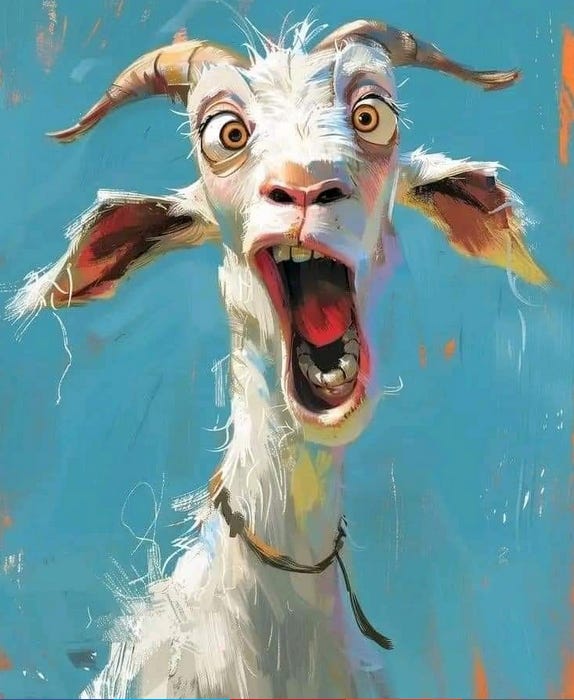
For most of my early career, I identified as a photographer who painted. That felt honest enough. The two things were separate, distinct, each with its own logic and its own set of tools.
Then in the early 1980s the line started to blur. I began combining black and white fine art prints with watercolor and graphite. Was the result a photograph? A painting? Certainly not a painting in any traditional sense. It did not have a clean answer. I did not have a clean answer. I kept making them anyway.
Later the blur went further. Digital painting from my photo, printed and then worked on top of with traditional media. Later still, AI-assisted work using my own images, pushed in whatever direction the piece wanted to go, printed, then layered with silkscreen, graphite, paint, whatever the surface asked for. Transfers onto wood. Resin over stone and concrete I had sculpted myself.
At some point the question “what kind of artist are you?” stopped having an answer I could give in one sentence. I tried “mixed media” for a while. Too thin. Then “experimental artist.” Closer, but it doesn’t cover the writing. It doesn’t cover the permaculture certification, the organic gardening, the eco dyeing, the making of earth pigments from foraged materials, the urban farming and love for homesteading and slow living. The curiosities keep accumulating. The practices keep multiplying. The studio, woodshop, garden and metal shop keeps filling up.
Every branding course, every gallery conversation, every well-meaning mentor has said the same thing: find a lane and stay in it. Make yourself easy to categorize. Build recognition. I have tried. Many times. I get bored fast. Something in me keeps escaping toward the next material, the next process, the next room in the house. Here is what I have come to believe: the question itself is the problem. “What kind of artist are you?” is not a neutral question. It is a request to make yourself easier to categorize. For someone else’s convenience. It assumes that the most important thing about a creative person is their medium, their style, their lane. It assumes that range is a liability. It isn’t. But it took me a long time to stop apologizing for it.
Studio Notes
What I’ve been making, thinking about, or working through.
There is a structure in the brain called the Default Mode Network. I talk about it a bunch. It is most active when you are not focused on a specific task. When you are walking, showering, staring out a window, letting your mind drift. It is also the primary site of associative thinking. The place where your brain quietly holds two unrelated things next to each other until it notices something neither one contained alone.
Hustle culture is, among other things, a sustained attack on this system. When every hour is accounted for, when rest feels like falling behind, when you can’t justify “just” taking a walk, the DMN never gets the space it needs to do its work. The connections don’t get made. The surprising ideas don’t surface. The work goes technically proficient and creatively flat.
But here is the part I find interesting: the polydisciplinary creative life is actually good conditions for the DMN. When you move between silk dyeing and gum oil printing and portrait work in different styles and eco printing with plant material, your brain is constantly holding unlike things in proximity. It is not scattered. It is doing exactly what it was built to do.
Slow, intentional, unhurried attention across many things is not the enemy of depth. In the right mind, it is the condition for it.
On the Table
A small, completable thing.
The honest inventory. Write down everything that is on your actual workbench, or in your active creative life right now. Don’t edit for coherence. Don’t leave things out because they don’t seem to fit. Then hang out for a minute and ask one question: what is the thread that only you would pull through all of these things? Not the medium. Not the style. The way of seeing. The thing that makes the list yours instead of anyone else’s. That thread is closer to your real answer than any category you could fit yourself into.
→ If something surfaces, I would genuinely like to hear it. Hit reply or message me.
In Good Company
Two people worth knowing if any of this resonates with you.
Emilie Wapnick coined the word “multipotentialite” for people who have many different interests and creative pursuits rather than one defining passion. Her TED talk on the subject has been watched millions of times, which tells you something about how many people have been quietly waiting for that word. Her argument is that range is not a failure to commit. It is a different kind of capability, one the world needs and tends to undervalue. Worth fifteen minutes of your time.
Malcolm Gladwell has written about psychology, crime, sports, music history, and a dozen other subjects with no obvious connecting thread. Every book is unmistakably him. The brand is not the subject. It is the lens. The curiosity. The restless way of finding the unexpected angle on any material he touches. If you have ever felt like your interests were too scattered to add up to anything coherent, Gladwell is useful evidence to the contrary.
A Quiet Note
Unhurried Letters is itself a polydisciplinary object. A handwritten travel story. A fine art print. A regional recipe card. A postcard that can be kept or passed along. Different things that belong together. Different rooms in the same house. If that sounds like something your life has room for, you can find it at unhurriedletters.com.
Leave the Light On
The next time someone asks what kind of artist you are, notice what happens in the half second before you answer. There is probably a small flinch. A reaching for the category that will make the conversation easier. A quiet editing of the real answer into something more manageable.
That flinch is worth paying attention to. It is the place where the wrong question gets asked and you instinctively try to answer it on its own terms.
You don’t have to. You are allowed to say: I make a lot of different things, and they are all connected, and the connection is me. That is not a failure to specialize. That is the whole point.
One-Click Check-In
If you want to read this later or find other issues, you can find them here → Living by Making on Substack or hit subscribe.